
Ep 3: We Begin with Gratitude
When things are at their darkest, what is it that “allows you to see promise and allows you to see beauty?” Joanna begins her exploration of some of the most difficult emotions and circumstances we face in a surprising place: with gratitude. This episode introduces the concept of the spiral, the basic structure of the Work That Reconnects.
In this episode:
- Why it’s necessary to speak our darkest thoughts out loud
- How to follow our fear and pain into a state of profound gratitude
- The spiral of the Work That Reconnects: gratitude, honoring our pain, seeing with new eyes, and going forth
- Bonus Exercise: “Gratitude Meditation”—the first stage on the spiral
We recommend starting a podcast club with friends or family to do these practices together. Links and assets to help prompt reflection and build community can be found with every episode on WeAreTheGreatTurning.com.
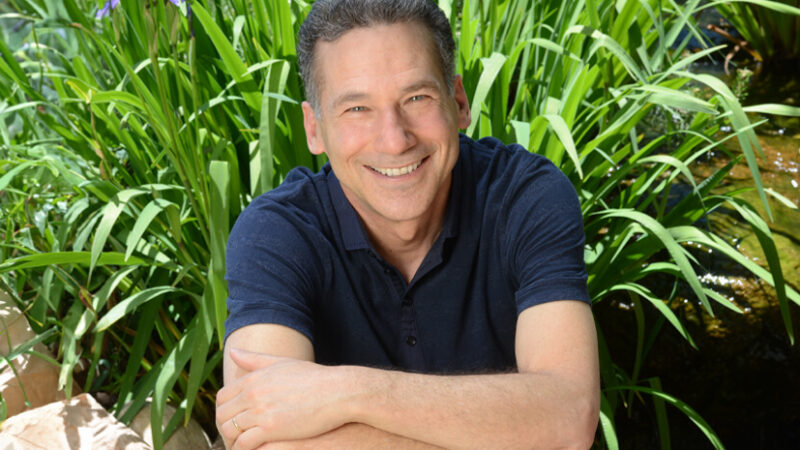
William Ury: Being a Possibilist
A healthy relationship—whether that’s between two people or two nations—is not one in which everyone agrees; it’s one where it’s safe for differences, and we have the skills to honor all of our needs. In this podcast, Tami Simon speaks with renowned mediator and bestselling author, William Ury, about his new book, Possible and the insights he has gleaned through more than four decades of conflict-resolution across the globe.
If you only listen to one podcast this year, may it be this one! Tami and William discuss: Meeting animosity with curiosity; shifting perspective and the metaphor of the balcony; self-observation; how more silence leads to more cooperation; the 3A trap: avoid, accommodate, or attack; the link between creativity and conflict; why negotiation is more about listening than speaking; reaching “second order agreement”; creating a “golden bridge” across our divides; universal needs and the question, what do you really want?; humble audacity; the notion of bringing in the third side; the importance of reconciliation; and more.
Note: This episode originally aired on Sounds True One, where these special episodes of Insights at the Edge are available to watch live on video and with exclusive access to Q&As with our guests. Learn more at join.soundstrue.com.
Ep 2 Bonus: Envisioning the Great Turning
This bonus episode will support you to take the main insights from Episode 2, “The Three Stories of Our Time,” deeper into your life.
In Episode 2, we talked about the three stories of our time: Business as Usual, the Great Unraveling, and the Great Turning. All three stories are true, and we can choose to give ourselves to the Great Turning—to building a more just and life-sustaining society.
We need inspiring visions for the kind of world we want to live in that can motivate us, move us to action, and so that we know what it looks like to succeed. So, in this bonus episode, we’re going to envision, in detail, what the world might be like if the Great Turning really were the predominant story of our time.
All you need is a quiet place where you can sit and close your eyes. We hope you’ll do this exercise with someone else, so that you can talk together about your experience after you finish. It might also help to have something to write with and on.
We recommend starting a podcast club with friends or family to do these practices together. Links and assets to help prompt reflection and build community can be found with every episode on WeAreTheGreatTurning.com.

Jonathan Foust: The Issues Are in Your Tissues
Jonathan Foust is a longtime teacher of yoga and meditation who has guided learners at the Kripalu Center for Yoga and Health and the Insight Meditation Community of Washington, DC for more than 20 years. He is a featured presenter for Sounds True’s Mindfulness Meditation Teacher Certification Program. In this episode of Insights at the Edge, Tami Simon and Jonathan discuss the practice of body-centered inquiry—specifically the surprising ways it can be applied to pain. Jonathan explains how he has worked with body-centered inquiry to explore his own migraines, and how he has discovered a curious freedom therein. Finally, Jonathan and Tami talk about using body-centered inquiry for decision-making and interrogating the self-made obstacles to our own freedom. (61 minutes)
Giving Thanks to the Earth
Many indigenous cultures refer to the more-than-human worlds as people. Clouds, trees, stones, plants—all belong to their own community, speak their own language, and have their own relationship to the spirit that moves through all things. The first time I recognized these more-than-human communities and felt their presence strongly as an adult was when I had spent a lot of time in the woods and became fascinated with trees. I noticed that in some places, many American beech trees grew together, while in other places, eastern hemlock congregated. In the beech groves, the simple-toothed leaves quaked in the breeze; their smooth, grey trunks reminded me of the mallorn trees from The Lord of the Rings. I couldn’t help but feel the presence of elves in those beech groves!
In the hemlock groves, the shadows were deep and the earth moist. The deep green boughs stretched and gently bobbed on the breeze, light, buoyant, and mysterious. The hemlock groves were hushed. Silence and watchfulness permeated the hemlocks’ shadows. Families of white pine created sun-toasted auburn carpets of needles, soft and aromatic in the afternoon light. Their trunks climbed high into the sky, and their bluish-green pine needles shone bright and happy in the sun. A feeling of optimism and joy seems to ring out when white pine needles shimmer in the sunlight. Under these mighty trees were perfect places to lie down or to sit and lean against trunks, perfect places to take in the tranquility of the land.
Looking into the distance, I could see patches of forest green on mountain slopes where communities of evergreens lived, and then the grey patches in the fall from oaks and maples that had lost their leaves. Suddenly it hit me: these are communities, tribes, families. Before this, I had not really seen or felt the profound reality of community that exists among trees of the same species, trees that congregate. Now, when I look out at hills or mountains in the distance, I see the tribes of tree beings whose presence creates a tapestry of color and texture all across our forested lands.
Trees communicate and support one another. Forest ecology expert Peter Wohlleben refers to the nutrient and information exchange that exists among trees in the microbial network underground as the “wood wide web.” There is evidence that trees work together to keep elder trees alive and that they warn one another of danger. We are symbionts with trees, relying on the oxygen they provide while they rely on the carbon dioxide we exhale. There is a give and take, a reciprocity, that binds us to the trees, plants, and other members of our earth community, all of whom share the atmosphere, nutrients, and waters of this living earth. To think of trees as objects denies what they are. To think that way minimizes and flattens the complex and mysterious reality of their “treeness.” This objectification of the living earth, whether it be trees, minerals, or animals, also flattens our consciousness and experience, causing us to miss out on so much of the beauty, love, and wonder to be found in relationship with the earth. When we think of the earth as composed of so many life-less objects, we give ourselves permission to treat them as such. If we take the time to slow down, to be mindful and observe the land, trees, and other crewmates of spaceship Earth, we strengthen our ability to see the reality of life’s living connections.
Reciprocity
Keep close to Nature’s heart … and break clear away, once in a while, and climb a mountain or spend a week in the woods. Wash your spirit clean.
JOHN MUIR
Rewilding is a way of seeing and being in relationship to life, and it can include learning ancestral skills for survival. Tom Brown Jr., a great tracking teacher, emphasizes the profound role gratitude and thanksgiving played in what he learned from his teacher Stalking Wolf, a Lipan Apache tracker and spiritual teacher. To truly feel and connect with the miracle of any living thing, any gift of the Creator, whether a piece of wood being carved into a sacred pipe or a plant or animal being harvested for food, one must honor the other being’s sacrifice and give thanks for what is received from that being. All of life is an exchange of energy. To live, all living things must consume, and in turn, be consumed. There is no escaping this.
Of all the world’s wonders, which is the most wonderful?
That no man, though he sees others dying all around
him, believes that he himself will die.
YUDHISHTARA, The Mahabharata
To be awake to the wonder of life is to be in a state of constant thanksgiving, for this breath, this bite of food, this caress of wind, this sunset, this chance to grow and serve others. A society whose people are involved in harvesting their food from their environment will likely be a culture that appreciates and that values thanksgiving. I believe that our collective loss of reverence for nature is in part due to our disconnect from the origin of our food. Pulling a potato or carrot out of the soil provides a sensual, embodied experience of taking life. When we take life, we have a natural inclination to want to give back, to restore balance.
We all need to embrace the ethic of thanksgiving again so that we don’t take the biodiversity of earth for granted. We can’t pretend that the water and air we pollute aren’t the water and air we rely on for our survival, for our health and well-being. A great start for a thanksgiving practice is with the breath, the thing we rely on most and most immediately. The birds who fly in the sky fly on our very breath. The air sweeps all around us, moving clouds, bringing snow and rain, making waves, and flowing in and out of our bodies with the oxygen that allows us to exist. The air we breathe moves the leaves in the trees, creating beautiful sounds that soothe our souls. We can go weeks without food and days without water but only a couple of minutes without the gift of breath. Throughout the world, there are cultures that hold the air and the wind as holy, as life-giving forces. The entire yoga tradition revolves around the fundamentals of breath, which can unlock expanded states of awareness and foster deep insights.
Giving Thanks
When I exhale, I know that the carbon dioxide flowing out of me will be absorbed by plant life and that the oxygen they exhale will flow into me. In my lifetime, I will ingest many living things, fruits, vegetables, animals, and water, and one day, my body will return to the earth, and other living things will eat me.
We are only stewards of our bodies for a time. Every seven or so years, every molecule in this body will have been replaced, so that the me I think of as me is stable only in my mind. Who I really am is living in a dynamic state of reciprocity with the cosmos. Our planet, which includes us, is made up of elements generated in ancient star explosions. So, when we walk barefoot in the grass, stand at the entrance to a forest, or look up at the cool moon on an autumn evening, we can acknowledge that we are not simply receiving beauty from a heavenly body, that there is more going on. Through mindfulness we can hold an awareness of our situation, one in which we are suspended between using and being used, between eating and being eaten, between enjoying and being enjoyed.
When did people stop talking to the earth? How does one thank the moon for being all that the moon is? I’ve made a habit of speaking to trees, stones, salamanders, the wind, and any other relative I see outside. I speak to everything in nature. Why? When I speak to the forest, it feels as if my words are resonating not only in the cavities of my human body but also through the air, back into my eardrums, and bouncing on trees, leaves, and stones. When spoken from the heart to the living earth, my words express love for what I experience as my greater self. I know that hemlocks and stones do not understand the English language; I am not anthropomorphizing them. Yet I feel fuller and more connected when I give myself permission to speak to the land. When I converse with the earth, sometimes the wind blows suddenly, as if in response, or a squirrel will throw a pine cone out of a tree, which also feels like some kind of answer. I don’t think we need to feel so isolated on this earth, so cut off and separate. We can honor our reciprocity with all of life by opening up the channels of communication with the more-than-human world.
Practice of Giving Thanks to the Earth
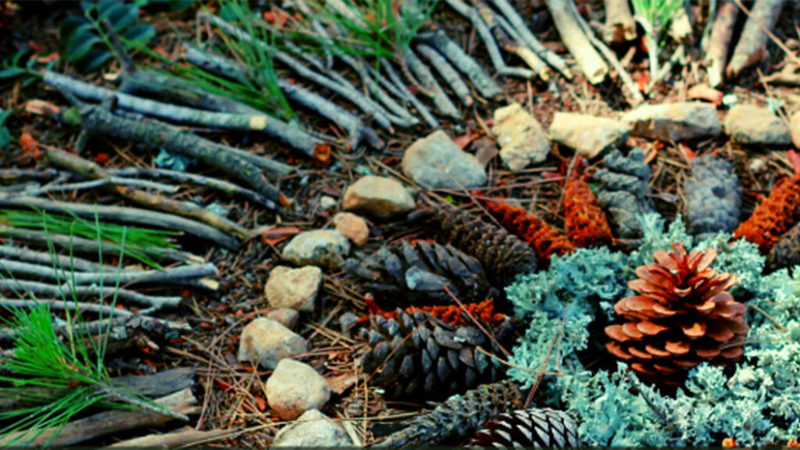
The next time you experience a perfect sunset, a refreshing walk through new fallen snow, or the gift of seeing a wild animal, consider offering a gesture of gratitude to the living earth. Drawing your hands to prayer in front of the heart and bowing to the light in that manifestation of the universe, you can simply say “thank you.” You might offer a small token, such as an acorn, pine cone, crystal, or small pebble, to show your thanks. You could also make an earth mandala, creating a circular symbol with natural objects you gather, and offer it with gratitude. As the days and months go by, the mandala will be received into the earth. You could also take a handful of water from a pond, lake, stream, bay, or ocean and speak your words of love and gratitude into the water, allowing your prayer to slip through your fingers and become one with the water of the earth. Maybe you would like to burn sage, palo santo, dried cedar, or another ceremonial incense of your choice, placing your intentions in the burning ember so that the rising smoke carries your prayer of gratitude and love to the heavens. These are small gestures, but they are powerful. These actions build a habit of focusing on the many ways we are in a deep state of interbeing with all of creation.
This is an excerpt from Rewilding: Meditations, Practices, and Skills for Awakening in Nature by Micah Mortali.

What Is Awake Awareness?
 You might be asking: If awake awareness as the source of effortless mindfulness is already here, why haven’t I discovered it yet? This is a good question. One reason we don’t discover it is that we don’t have awake awareness on most of our Western psychological maps. Many people who have longed and strived to be free of suffering have missed awake awareness, not because they lacked desire or commitment but because they didn’t know what to look for or where to look.
The Shangpa Kagyu tradition of Tibetan Buddhism gives four insightful reasons we don’t naturally discover awake awareness, which I find quite helpful:
1. Awake awareness is so close that you can’t see it.
2. Awake awareness is so subtle that you can’t understand it.
3. Awake awareness is so simple that you can’t believe it.
4. Awake awareness is so good that you can’t accept it.
GLIMPSE: Awake Awareness Knows Without Using Thought or Attention
In this glimpse, instead of focusing on what we are aware of, we will have awareness be aware of itself. This may be something that has never crossed your mind. In learning about using awareness, instead of attention, we will look back to the source of mind, awake awareness, and then focus from here. Instead of following the flashlight of attention out to the movie screen of experience, we see if we can feel awareness directly. We have learned to experience life as a subject looking at objects, even internal objects like thoughts and emotions. One helpful practice of deliberate mindfulness is called “mental noting.” In the mental noting practice, our mindful witness becomes more precise by labeling thoughts, feelings, and sensations as they arise. In this mindful glimpse, we will let go of labeling and instead learn to trust the intelligence of awake
awareness. Now we will have awareness feel what awareness is like when it is both the subject and the object. It will be helpful to have this invisible, contentless awareness know itself as we separate the awareness-based knowing from thought-based knowing.
1. To begin, simply close your eyes while allowing your awareness to remain open. Feel your breath moving within your body. Feel your whole body from within while noticing your breathing happening by itself for three breaths. Be easy and comfortable. Relax while remaining alert.
2. Take a moment to see what is here now. Notice how your body is feeling. Is it uncomfortable, comfortable, agitated, relaxed, tired, or neutral? Just be aware of your body without trying to change it. Just be aware of it as it is.
3. Now simply notice what is aware of these feelings and sensations. Feel the awareness in which these sensations are happening. Rather than being aware of sensations, feel the awareness that is aware. Notice that the awareness is not tired, is not in pain, is not agitated or anxious. Feel how this awareness is with your body.
4. Now notice the activity of your mind and thoughts. Just be aware of whether your thoughts are agitated, calm, tired, emotional, anxious, or neutral. Without changing anything at all, allow your mind and thoughts to be as they are.
5. Now notice the space in which thoughts are moving. Be interested in the awareness instead of the thoughts. Shift to notice not just the content but the context. Feel the awareness that is aware. Notice how awareness allows your mind to be as it is without changing anything.
6. Begin to notice that awake awareness is alert, clear, and nonjudgmental. Feel the awareness that is not tired, anxious, or in pain. Notice that awake awareness is all around and inherent within your body and within your mind. Instead of being identified with the states of your body or mind or trying to accept or change them, simply become interested in what is aware.
7. What is awareness like that is already accepting of things as they are—right here and now? Notice the awareness of the next sound you hear. Does awareness have a location or size? What is it like to be aware of experiences from this pain-free, spacious awareness?
8. Now simply rest as the awareness that is aware of your thoughts and sensations. Hang out as awareness without going up to thought to know or down to sleep to rest. Be the awareness that welcomes your sensations and thoughts. Ask yourself: Am I aware of this spacious awareness? Or, What’s it like when I’m aware from this spacious awareness, which is welcoming thoughts, feelings, and sensations? Notice that the awareness is aware from all around and from within—spacious and pervasive.
9. Just let go of focusing on any one thing. Be aware of everything without labeling. Feel that your awareness is no longer knowing from thought. Feel what it is like to be aware from awareness, which includes your thoughts and sensations from head to toe.
10. Simply let be and remain uncontracted and undistracted, welcoming without effort.
This is an excerpt from The Way of Effortless Mindfulness: A Revolutionary Guide for Living an Awakened Life by Loch Kelly.

 Loch Kelly, MDiv, LCSW, is a leader in the field of meditation and psychotherapy. He is author of the award-winning Shift into Freedom and founder of the Open-Hearted Awareness Institute. Loch is an emerging voice in modernizing meditation, social engagement, and collaborating with neuroscientists. For more, visit lochkelly.org.
Buy your copy of The Way of Effortless Mindfulness at your favorite bookseller!
Sounds True | Amazon | Barnes & Noble | Indiebound
