
Waking Up: What Does It Really Mean?
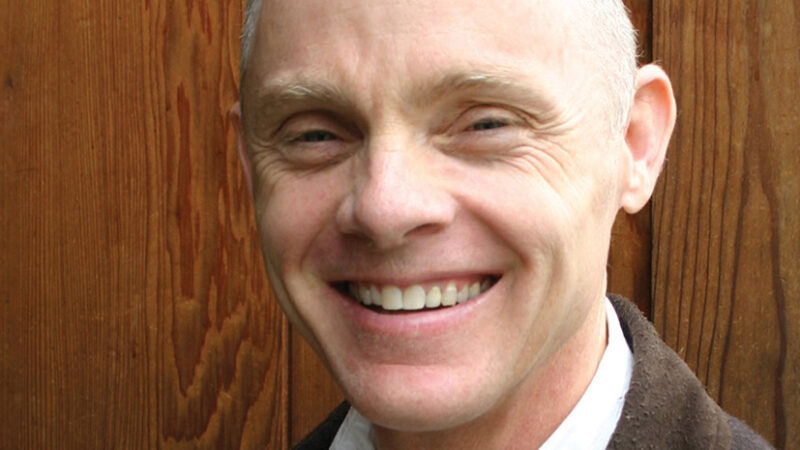
Adyashanti is a widely beloved, American-born spiritual teacher whose practice is rooted in Zen Buddhism but has expanded beyond any one path or perspective. He has created many books and audio programs through Sounds True, including Resurrecting Jesus, Emptiness Dancing, and Healing the Core Wound of Unworthiness. In this episode of Insights of the Edge—which previously appeared as part of the provocative interview series Waking Up: What Does It Really Mean?—Tami Simon and Adyashanti inquire deeply into what exactly constitutes “awakening.” Adya describes his own experiences of awakening, vividly comparing and contrasting his felt sensation of each of these life-changing experiences. Tami and Adya also discuss whether awakening is a sudden or gradual process, and what one can and cannot expect from these moments of profound epiphany. Finally, Adya shares his pith instructions on how to encourage such a spiritual awakening.

Our Evolutionary Leap
Lynne Twist is a global activist, author, and teacher who has devoted her life to sustainability and economic integrity. An original staff member of The Hunger Project, she is author of The Soul of Money and president and founder of the Soul of Money Institute. She is also the author of the Sounds True audio learning program Unleashing the Soul of Money.
In this podcast, Lynne joins Sounds True’s founder, Tami Simon, to discuss the challenges and opportunities now facing humanity—and the invitation to each one of us to make a difference as we embrace this critical time in our evolution at the beginning of a new millennium.
Lynne and Tami also talk about our unique place in time and the emerging new approach to business; the Pachamama Alliance and the prophecy of “The Eagle and the Condor”; tapping the wisdom of “grandmother energy”; Buckminster Fuller and creating a world that works for everyone; the invitation to each one of us to “take an evolutionary leap and dream big now”; environmental regeneration and redefining humanity; reclaiming our home in the ecological world, and creating economies that respect nature; giving up the scramble and becoming totally present in the moments of our life; purpose, choices, and trusting our feelings; bravery, humility, and surrender on the path; and more

Shining Bright Without Burning Out
Mara Bishop is a shamanic practitioner, intuitive consultant, teacher, author, and artist. In private practice, she uses her Personal Evolution Counseling™ method to provide an integrated approach to spiritual healing, personal growth, and emotional well-being. She is the author of the books Shamanism for Every Day: 365 Journeys and Inner Divinity: Crafting Your Life with Sacred Intelligence, and, with Sounds True, she is the author of the audio learning program Shining Bright Without Burning Out: Spiritual Tools for Creating Healthy Energetic Boundaries in an Overconnected World.
In this podcast, Mara speaks with Sounds True’s founder, Tami Simon, about how in today’s world we can learn to value our sensitivity instead of feeling overwhelmed and exhausted. Mara and Tami also discuss shamanism as a path of direct revelation, accessing non-ordinary consciousness for insight and healing, the three phases of creating healthy energetic boundaries, the difference between “just plain stress” and burnout, discovering your energy personality archetypes, understanding your energy ecosystems and how they interact, working on yourself and bringing light to the shadow aspects of your personality, the difference between compassion and empathy, energetic cleansing methods, the paradox of “one and all one,” Mara’s concept of “powering on” to amplify and shine our inner light, how our world has become “overconnected” and how to avoid the burnout this can create, the shamanic practitioner as someone who can “see through the eyes of the heart,” and more.

Mirabai Starr: Wild Mercy
Mirabai Starr is a writer and modern mystic whose books include God of Love and Caravan of No Despair. Most recently, she has published Wild Mercy: Living the Fierce and Tender Wisdom of the Women Mystics with Sounds True. In this episode of Insights at the Edge, Tami Simon speaks with Mirabai about her approach to feminine mysticism and what brought her to write Wild Mercy. Mirabai explains women mystics’ emphasis on interbeing as well as the innate connection between spiritual seeking and the fate of the earth. Tami and Mirabai talk about the potential forms that spiritual communities may take in the future and how we can navigate the death throes of patriarchal religious structures. Finally, they discuss the reunion of masculine and feminine perspectives, as well as why loss opens us to immense compassion. (60 minutes)
Fleet Maull: Radical Responsibility
Fleet Maull is an author, consultant, and executive coach who founded Prison Dharma Network and the National Prison Hospice Association while serving 14 years in federal prison. In the 20 years since his release, Fleet has taught the expansive philosophy he discovered while incarcerated as a meditation teacher, end-of-life educator, and the creator of the Radical Responsibility training program. With Sounds True, he has released the book Radical Responsibility and accompanying audio program Living with Radical Responsibility. In this episode of Insights at the Edge, Tami talks with Fleet about the roots of Radical Responsibility and how its philosophy came to define his life. Fleet explains what it means to leave behind your “victim story” even while honoring the fact that your boundaries were violated. Tami and Fleet discuss Karpman’s model of “the drama triangle,” which is essential to the tenets of Radical Responsibility. Finally, they speak on the neurobiology behind the Radical Responsibility model, as well as the paramount importance of recognizing the innate goodness of other people. (71 minutes)

Stephen Aizenstat: Increasing Your Imaginal Intelligen...
When we’re children, we’re encouraged to use our imagination. Yet over time, we tend to leave the imagination behind and emphasize logic and rational thinking. In this podcast, Tami Simon speaks with Pacifica Graduate Institute founder Stephen Aizenstat, Ph.D., about reclaiming the vast resources of our imagination and boosting what he refers to as imaginal intelligence.
Covering fascinating insights in his new book, The Imagination Matrix, Tami and Professor Aizenstat discuss: imaginal intelligence—the capacity to evoke imagination; how curiosity opens a different quality of being in the world; imagination and the neuroplasticity of the mind; the Dig—Aizenstat’s term for journeying into the matrix of the imagination; the practice of Dream Tending; active imagination and the work of Carl Jung; the autonomy of the deep imagination; two questions that shift us from the person-centric view of our dreams; the sense of support and belonging we find through dreamwork; how imagination evokes innovation, creativity, and motivation; the four quadrants of the Imagination Matrix—Earth, Mind, Machine, and Universe; “the place of confluence” and accessing the gifts of the imaginal realms; dreamwork as complementary medicine; the Wounded Healer; listening to the stories coming forward at this time in human history; and more.
Note: This episode originally aired on Sounds True One, where these special episodes of Insights at the Edge are available to watch live on video and with exclusive access to Q&As with our guests. Learn more at join.soundstrue.com.