

How Reframing Conflicts Can Actually Help Your Relatio...
In the Internal Family Systems model, the practice of speaking for, rather than from, parts when they are triggered is an important aspect of Self-leadership. When people receive a message from you, it has two components: the content (the actual words) and the energy behind the words. When your protective parts are upset and speak directly to another person, invariably they will trigger parts in the other. When, on the other hand, you listen to your protectors and then speak for them, from your Self, the message is received in a very different way, even if you use the same words that your parts are saying. Your words lose their judgmental sting or their off-putting desperation and coerciveness. Instead, your respect and compassion for the other person will be heard in addition to the courage of your convictions.
Self energy has a soothing effect on any parts it touches, whether they are in you or in another person. When your parts trust that you will speak for them, they feel less driven to take over and explode at people. What they really want is to have a voice—to be listened to by you and to have their position represented to others.
Practice: SELF-LEADERSHIP AS A WAY OF INTERACTING IN A CONFLICT
These practices—remaining the “I” in the storm or the empty vessel, and speaking for rather than from your parts—can be combined into a general way of relating as a couple when you have conflict. When you begin to fight, each of you can try the following:
- Pause
- Focus inside and find the parts that are triggered
- Ask those parts to relax and let you speak for them
- Tell your partner about what you found inside (speak for your parts), and
- Listen to your partner from your open-hearted Self
When a couple is embattled and each focuses inside, as in step 2, usually they only hear from their protectors. If it feels safe enough, moving an extra step toward vulnerability can reap big rewards. That step involves staying inside long enough to learn about the exiles that your protectors are guarding, and then telling your partner about these vulnerable parts. In most cases, when one partner has the courage to reveal the vulnerability that drives their protectiveness, the atmosphere immediately softens and the couple shifts toward Self-to-Self communication.
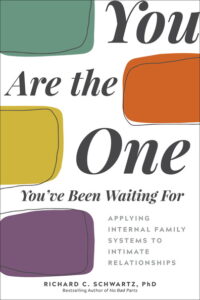
This is an excerpt from You Are the One You’ve Been Waiting For: Applying Internal Family Systems to Intimate Relationships by Richard C. Schwartz, PhD.
Learn More
Amazon | Barnes & Noble | Bookshop | Sounds True
Stan Tatkin: In Each Other’s Care
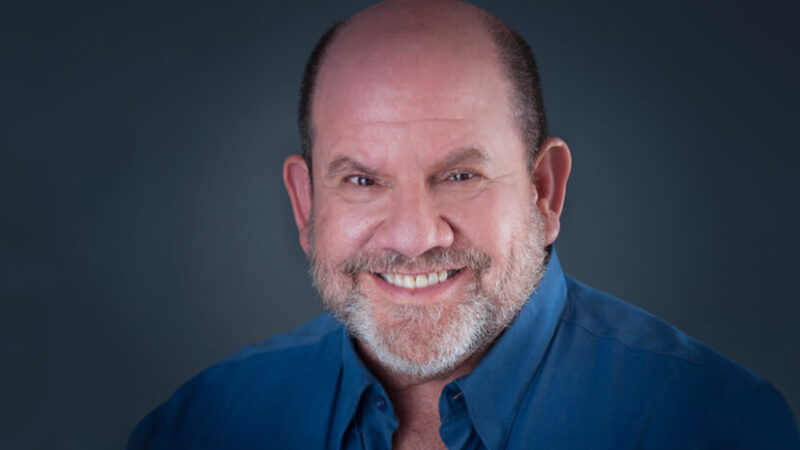
Dr. Stan Tatkin is uniquely talented at helping couples shift from being in each other’s faces to being in each other’s care. In this podcast, Tami Simon speaks to the innovative therapist and author about his new book, In Each Other’s Care: A Guide to the Most Common Relationship Conflicts and How to Work Through Them, discussing some of the research-based, practical strategies he has developed in his celebrated PACT (Psychobiological Approach to Couples Therapy) model.
Give a listen to this gritty, honest, informative, and empowering conversation exploring: cultivating secure functioning relationships; why couples must create their own culture of shared power, respect, and collaboration; finding the balance between independence and interdependence; the one-directional nature of codependency; becoming your partner’s whisperer; why “earned love” is what endures; the fantasy of the same page; attachment versus love; mutual purpose and care as ingredients for an awesome relationship; the physical toll of an insecure functioning relationship; the Sherlocking technique; the power of eye contact; practicing quick repair; touch: an unequivocal signal of friendliness; the basic need in relationship: you and I are OK; the Big Five: sex, money, kids, time, and mess; jealousy and envy; longevity and happiness through co-creating the architecture of your relationship and understanding how you interact under stress; and more.
Note: This episode originally aired on Sounds True One, where these special episodes of Insights at the Edge are available to watch live on video and with exclusive access to Q&As with our guests. Learn more at join.soundstrue.com.

Rainn Wilson: Standing for a Spiritual Revolution
How do we reimagine society and build it anew upon a foundation of love, unity, and compassion? This is the central question Rainn Wilson explores in his new book, Soul Boom: Why We Need a Spiritual Revolution. In this podcast, Tami Simon sits down with the actor and comedian to learn, in Rainn’s words, “Why the hell is the actor who played Dwight in The Office writing a book about spirituality?”
Enjoy this inspiring conversation that is at once funny, clever, and sincere, as Tami and Rainn discuss the cultural critique of people on a spiritual path; connecting with others from both our brokenness and wholeness; God, higher powers, and belief in a great mystery; the radiant word “devotion”; finding your authentic voice; the need for a spiritual revolution in our times; creating a new mythology; the potential pitfall in being “spiritual but not religious”; the Latin word “religio”—to bind together; the Baha’i faith; Rainn’s advice to don’t just protest—build something; the maturation of humanity; keeping hope alive and fighting for joy; and more.
Note: This episode originally aired on Sounds True One, where these special episodes of Insights at the Edge are available to watch live on video and with exclusive access to Q&As with our guests. Learn more at join.soundstrue.com.
Frederic Laloux: Organizations Beyond Ego
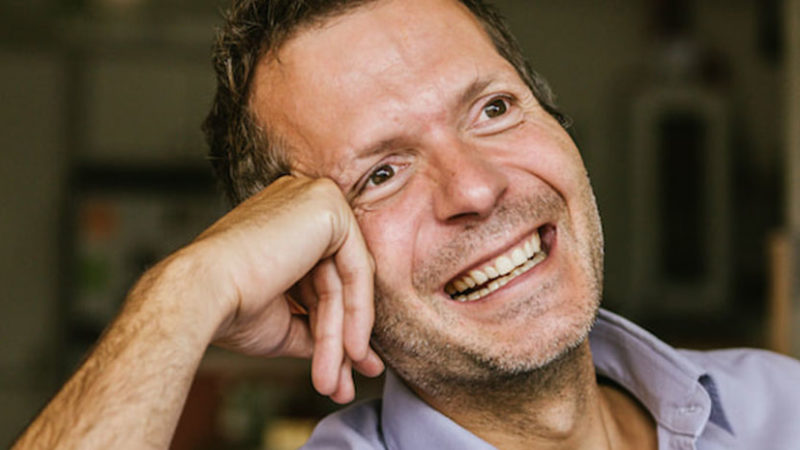
Frederic Laloux is a business analyst and author whose book Reinventing Organizations: A Guide to Creating Organizations Inspired by the Next Stage of Human Consciousness is considered one of the most important management guides of the past decade. In this episode of Insights at the Edge, Tami Simon talks to Frederic about what it takes to become a “next-level organization” that meets the challenges and opportunities of expanding human consciousness. Frederic explains that the next stage of human development will be to move beyond ego, elaborating on how this will look in the business world. Tami and Frederic discuss the difficult balance between fulfilling financial obligations and living out one’s fundamental truth. Finally, they speak on the development of open and spiritually nourishing organizations, as well as the movement toward decentralizing authority in business places. (69 minutes)

MaryCatherine McDonald: The Trauma Response Is Never W...
For centuries, we’ve been taught that being traumatized means we are somehow broken—and that trauma only happens to people who are too fragile or flawed to deal with hardship. Instead, says Dr. MaryCatherine McDonald, the trauma response proves our spirit cannot be broken. In this podcast, Tami Simon and “MC” (as her students call her) discuss her new book, Unbroken: The Trauma Response Is Never Wrong—And Other Things You Need to Know to Take Back Your Life, and how we might as a society begin to update our understanding of trauma and its healing.
Tune in for this inspiring conversation about the impact of trauma on the narratives that make up our identity; recalibrating the nervous system after trauma; memory and the hippocampus; relearning a sense of embodied safety; dealing with loss in our grief-phobic culture; trauma defined as “an unbearable emotional experience that lacks a relational home”; the unconscious nature of triggers, and how to raise awareness around them; the miracle of your adaptive brain and body; trust and community in the healing of trauma; reconciling life’s ultimate vulnerability; finding resilience and strength in these uncertain times; attunement, holding space, honesty, and other elements that provide a relational home; realizing an anchor in the “tiny little joys”; the healing power of… Tetris?; healthy regulation; and more.
Awe and a Meaningful Life
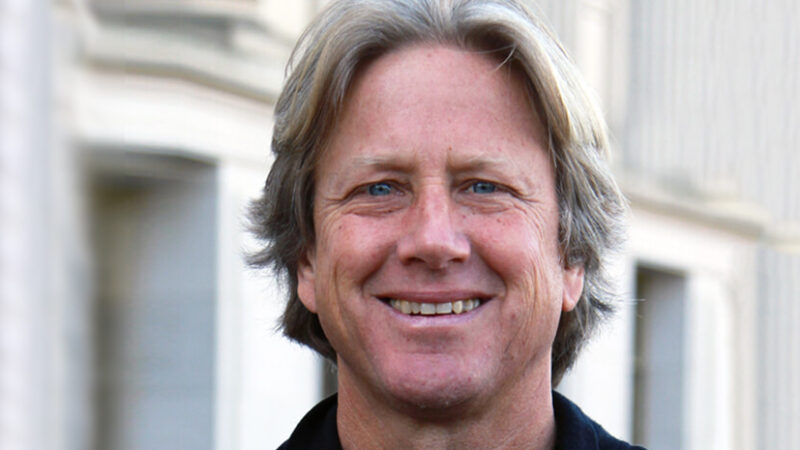
Dacher Keltner, PhD, is a professor of psychology at the University of California, Berkeley, and is the founding director of the university’s Greater Good Science Center (GGSC). He is the host of the GGSC’s award-winning podcast, The Science of Happiness, and is a co-instructor of the GGSC’s popular online course of the same name. He has devoted his career to studying the nature of human goodness and happiness, conducting groundbreaking research on compassion, awe, laughter, and love. He is also the bestselling author of The Power Paradox: How We Gain and Lose Influence and Born to Be Good: The Science of a Meaningful Life, and is a coeditor of The Compassionate Instinct: The Science of Human Goodness, in addition to more than 100 scientific papers and two bestselling textbooks.
In this podcast, Sounds True’s founder, Tami Simon, speaks with Dr. Dacher Keltner about his inspiring work and his exploration of how the experience of awe, gratitude, empathy, and other prosocial emotions is intimately tied to our capacity to live a life of meaning. Tami and Dacher discuss Charles Darwin’s study of emotions and how “survival of the kindest” may be more true than “survival of the fittest”; the connection between emotions and ethics and the changing nature of power; the instinct of sympathy; making kindness your core principle; choosing prosocial emotions in stressful, energy-draining situations; “vagal superstars” and the practice of compassion; establishing healthy boundaries to avoid empathic distress (or taking in other people’s suffering); creating positive changes in the health-care system; the experience of awe in the presence of another person; and more.