
E18: Beyond the Mask of the Ego: Embracing Pure Awaren...
Consciousness is the foundation of all meaning, because without awareness, nothing has significance. People mistakenly identify with their ego, which is simply a collection of thoughts and self-concepts they are aware of. This false identification leads to tremendous suffering. True spiritual enlightenment comes from recognizing that the self is not the ego but the pure awareness behind it.
For more information, go to michaelsingerpodcast.com.
© Sounds True Inc. Episodes: © 2024 Michael A. Singer. All Rights Reserved.
Turning to my Filipino Roots to Tend to Womb Loss
October is a meaningful month for me as it honors two important parts of my identity. It is Filipino American History Month, a time to acknowledge and honor the presence and contributions of Filipino Americans. Although my parents immigrated to the United States from the Philippines in 1980, records show that Filipinos were present here as early as 1587, landing in present-day Morro Bay, California as part of a Spanish galleon. In an interesting moment of alignment, I am writing this to you from Morro Bay, feeling the palpable power of the land and seeing the sacred 600-foot-tall Morro Rock–known as Lisamu’ in the Chumash language and Lesa’mo’ by the Salinan people–standing proudly just outside the window of our Airstream trailer. October is also Pregnancy and Infant Loss Awareness Month, a time to increase awareness about and honor those of us who have endured such loss- what I often refer to as womb loss.
This October is particularly meaningful with my book, To Tend and To Hold: Honoring Our Bodies, Our Needs, and Our Grief Through Pregnancy and Infant Loss, officially launching on October 22. In it I share how my identities as a Filipina American and bereaved mother intertwine, and how valuable it can be for survivors of womb loss to turn to their cultural traditions for support as they grieve and as their postpartum bodies return to a non-pregnant state. How I came across this online essay and found solace in the language of my ancestors who use terms to describe miscarriage as “someone from whom something was taken away” rather than placing blame with the prefix mis- which means wrongly or badly. I did not carry my pregnancies wrongly or badly. Loss was something that my body experienced.
The following is an excerpt from To Tend and To Hold that I hold dear as it shares a traditional Filipino dish I grew up eating and that I share now as a postpartum doula to offer comfort and nourishment to those who are postpartum, both with living children and after loss. I hope it may offer you comfort as well, no matter if your experience of womb loss was recent, in the past weeks, months or even many years ago. My heart is with you and please know that you are not alone as you grieve and as you heal- at your own pace and in your own way.
~
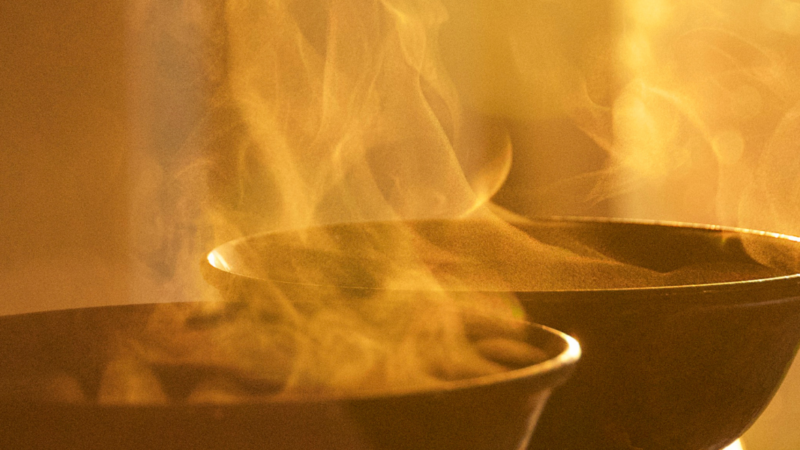
I recently cooked this recipe for champorado, a Filipino rice porridge, for my beloved friend Katrina on a very tender anniversary, the due date of one of her children and the death date of another. Her child, Zeo Thomas, would have been born that day had he not died in the womb at five months gestation. It was within the same year of his death that her second child, Solis Vida, died in the womb in the first trimester. In truth, Katrina had been bleeding for over a week to release her second pregnancy, but as she bled through Zeo’s due date, she felt an intuitive pull to honor this same date as Solis’s death date. I thought of my friend as I made my way slowly through the grocery store. Though it was crowded and busy, I felt cocooned in my thoughts and intentions for her—how I wanted to help her feel seen and held during this difficult time—and I found myself gathering each of the ingredients in a mindful way that felt like the beginning of a bigger ritual. Knowing I was going to cook for her to honor her, her babies, her grief, and also her longings added a layer of reverence to what would otherwise be a standard grocery run. Later as I cooked the porridge in her home, I channeled my love and condolences into each step. And when I finally brought the warm bowl of champorado to her and saw her reaction, it was my turn to feel honored. Honored to be there with her. Honored to tend to her. And with a dish we both knew from our childhoods. She dubbed it “postpartum champorado,” and so it shall be known.
Warm and soft, rice porridge is one of the best postpartum foods as it is easy to eat, warming to the body, and gentle on the digestive system. Its very nature is to offer comfort. In my opinion, champorado, a Filipino chocolate rice porridge I grew up savoring, is one of the most heartwarming dishes, with the cacao tending as much to the emotional heart as to the physical body. It can be offered any time of day for both a filling meal and a gentle reminder that there is still sweetness in life even amidst grief.
In this nourishing version, cacao powder is used in place of cocoa so that we may benefit from all that this superfood has to offer, including iron to help rebuild red blood cells, flavonoids to improve blood flow, and magnesium to ease anxiety and depression. In addition to being nutrient-rich, cacao is also known to lift the mood. If the thought of preparing food feels beyond your current capacity at this moment, consider sharing this recipe with a partner, postpartum doula, or other support person and asking them to cook it for you. Additionally, if you are currently pregnant, please consult your health-care provider before consuming cacao as it contains caffeine.
- 1 cup sweet rice (also called glutinous or sticky rice) or sushi rice
- 5 cups water
- 1/4 cup cacao powder
- 1/2 cup brown sugar
- 1 tablespoon unflavored protein powder (optional)
- Condensed coconut milk for topping
- Cacao nibs (optional)
Rinse the sweet rice several times until the water runs clear when drained.
Combine rice and water in a pot over medium-high heat. Bring to a boil, then reduce heat to medium and continue to cook until the rice is soft and the porridge thickens (about 20 minutes), stirring often to keep from sticking to the bottom of the pot.
Add cacao powder, brown sugar, and unflavored protein powder. Stir to combine, then remove from heat.
Drizzle condensed coconut milk (or other milk of choice) and top with cacao nibs. Serve hot.
This is an adapted excerpt from To Tend and to Hold: Honoring Our Bodies, Our Needs, and Our Grief Through Pregnancy and Infant Loss by Eileen S. Rosete.
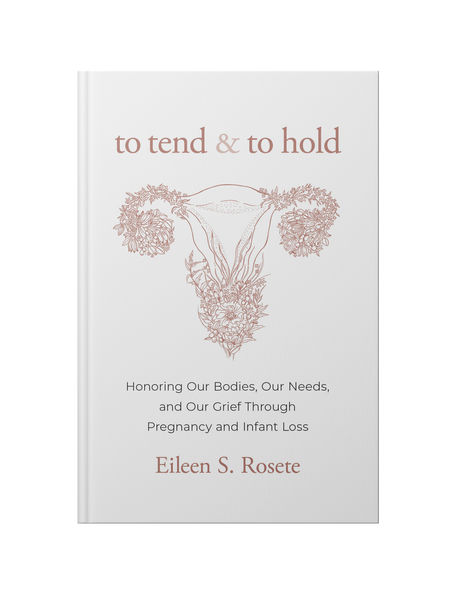
To Tend and to Hold
Amazon | Barnes & Noble | Bookshop | Sounds True
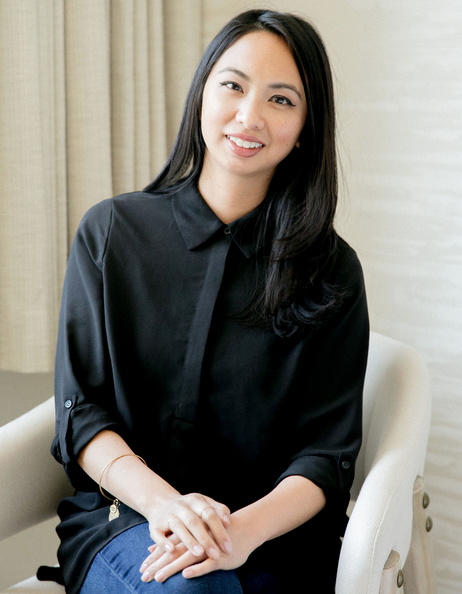
Eileen S. Rosete
E17: The Power of Acceptance: Evolving Beyond the Ego
Life is a spiritual journey where every experience serves as an opportunity for growth and evolution. The core of human suffering stems from attachment to the ego and resistance to the natural flow of life. By recognizing that we are not our egos but are instead the divine consciousness that is aware of the ego, we can transcend suffering and embrace inner peace. The ultimate purpose of life is spiritual liberation, achieved by letting go of resistance, aligning with reality, and embracing love and compassion in all circumstances.
For more information, go to michaelsingerpodcast.com.
© Sounds True Inc. Episodes: © 2024 Michael A. Singer. All Rights Reserved.
Melissa Brown: Nourishing Your Nervous System
When was the last time you felt truly relaxed, present, and at peace with everything going on in your life and in our world? In this podcast, Tami Simon speaks with Melissa Brown about her new audio learning program, Nourishing Your Nervous System, and how we can begin to empower ourselves to choose the state of regulation over dysregulation. Give a listen to this practical and inspiring discussion of the ventral vagal branch of the parasympathetic nervous system—and how we can access it for calm, joy, and vitality; co-regulation with others as a means to move out of dorsal depression; productive thinking versus rumination and other forms of unhealthy thinking; the elongated breath as a tool for shifting out of sympathetic arousal (or the “fight, flight, freeze” response); improving your “vagal tone”; doom-scrolling, binge-watching, and other ways we distract ourselves from what we don’t want to feel—and how we can learn to hold a state of vitality and a state of tension at the same time; the psoas muscles and their connection to nervous system activation; the benefits of “constructive rest pose”; “fixed action patterns” and how the psoas muscles store trauma; attuning to your heart; and more.

E47: Unraveling the Ego: Returning to Pure Awareness
Consciousness is the fundamental essence of your being, distinct from the physical and psychological objects it is conscious of. But your conscious awareness gets so distracted by external objects, thoughts, and emotions, that it becomes identified with them. This identification forms the ego, the false sense of “I.” The spiritual path involves letting go of distractions and false identifications in order to remain in the true “seat of self,” a state of pure awareness and joy. The ultimate realization is reconnecting with the source of consciousness, leading to unity with the divine and a life of peace and ecstasy.
For more information, go to michaelsingerpodcast.com.
© Sounds True Inc. Episodes: © 2025 Michael A. Singer. All Rights Reserved.

Jacqueline Suskin: Every Day Is a Poem
Jacqueline Suskin is a poet and author whose published titles include Help in the Dark Season and The Edge of the Continent trilogy. With Sounds True, she has written a new book titled Every Day Is a Poem: Find Clarity, Feel Relief, and See Beauty in Every Moment. In this episode of Insights at the Edge, Tami Simon speaks with Jacqueline about the soulfulness of poetry and the internal changes one goes through while writing it. They discuss Jacqueline’s affinity for working with manual typewriters and the success of her ongoing Poem Store project. Jacqueline and Tami talk about the poetic impulse that is the root of true change, as well as overcoming the inner critic’s desire to stifle creative expression. Finally, Tami considers the “trance state” of creative flow and Jacqueline shares a spontaneous poem for the audience.