
E71: The Journey Back to Self: The Path of Spiritual E...
Modern physics has shown us that all form, including our bodies, is simply vibrations in an underlying omnipresent field, the quantum field. Through deep meditation, ancient yogis also found an underlying omnipresent field, consciousness. Could these fields end up being the same? The key to exploring this for yourself is to realize that you are not your thoughts, emotions, or experiences—you are the consciousness observing them. To remain seated in this state of awareness, you must learn not to be distracted by these objects of consciousness. Spiritual evolution is not about becoming something; it’s about ceasing to identify with what you are not.
For more information, go to michaelsingerpodcast.com.
© Sounds True Inc. Episodes: © 2025 Michael A. Singer. All Rights Reserved.
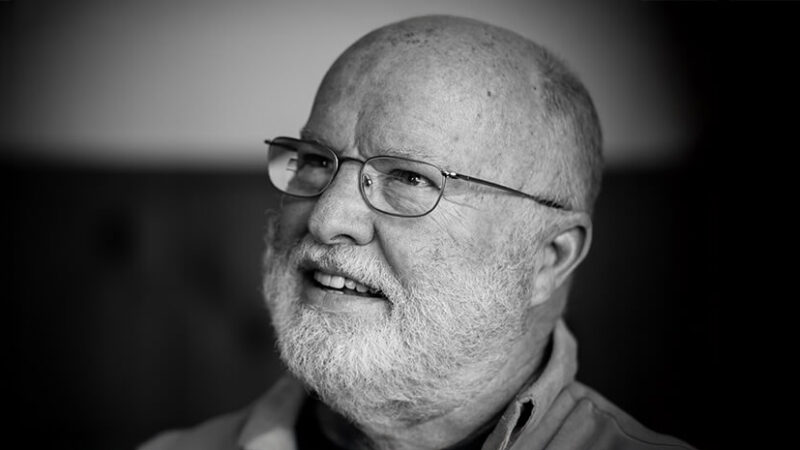
Richard Rohr: Gratuitous Goodness in an Age of Outrage
The prophets and mystics of the Judeo-Christian tradition each had their ways of bringing attention to the hypocrisies and injustices of their particular period in history. Here in the year 2025, as we navigate our own time of disruption and upheaval, how can we as individuals raise our voices and become the compassionate, conscious change agents our world so desperately needs? In this podcast, Tami Simon speaks with Franciscan friar and ecumenical teacher Richard Rohr about his new book, The Tears of Things, and what we can learn from the “sacred revolutionaries” who came before us.
Tune in to explore: the prophet’s mission and “making good trouble”; self-critical thinking (and how it’s unknown to most major institutions); sacred criticism and the revelation of the shadow; the paradigm of order, disorder, and reorder; outrage, cosmic sadness, and unlimited praise; using anger to cover up sadness; grief work and “getting to the hallelujah”; discovering the foundation of hope; contemplative thinking; conversion and transformation; opening to grace; letting go of control; why “what we don’t want to see is the problem”; waking up from our collective illusion (especially around power and control); living in a deceit-allowing culture; the word “evil”; an ever-present sense of goodness in the world; holding the tension of opposing truths; gratuitous goodness; realizing a joy that cannot be taken from you; the prophet Jeremiah and the Book of Lamentations; why the opposite of faith is not doubt but certainty; acting from the highest levels of motivation; and more.
Note: This episode originally aired on Sounds True One, where these special episodes of Insights at the Edge are available to watch live on video and with exclusive access to Q&As with our guests. Learn more at join.soundstrue.com.
E70: Beyond the Self-Concept: Returning to Spiritual T...
Have you noticed that you live with a personal mind that is shaped by your past experiences? In that mind, you develop a self-concept of how life should be. This ego-mind leads to tremendous suffering and distorted views of truth. True spirituality involves recognizing that you are not your thoughts or experiences, but the consciousness that observes them. By ceasing to identify with your ego and facing reality without resistance, you can awaken to a deeper truth and experience lasting peace and fulfillment.
For more information, go to michaelsingerpodcast.com.
© Sounds True Inc. Episodes: © 2025 Michael A. Singer. All Rights Reserved.

Eckhart Tolle: Conscious Manifestation
Eckhart Tolle is one of the world’s most renowned spiritual teachers. In addition to hosting many talks, retreats, and seminars, Eckhart has written two all-time bestselling books: The Power of Now and A New Earth. In this special episode of Insights at the Edge, Tami Simon joins Eckhart for an in-depth question-and-answer session that includes queries from members of his teaching community. In preparation for a new, eight-week online course on conscious manifestation, Eckhart explains the difference between creating from the demands of the ego and from a place of still Presence. Eckhart also describes how to deal with doubts and fears of insufficiency during the creative process. Finally, Eckhart comments on the true origins of inspiration and how you can use the principles of conscious manifestation to affect positive change in the world.(68 minutes)

Micah Mortali: Rewilding
Micah Mortali is the director of the Kripalu School, a certified yoga teacher, and a longtime wilderness guide. With Sounds True, he has published Rewilding: Meditations, Practices, and Skills for Awakening in Nature. In this episode of Insights at the Edge, Tami Simon speaks with Micah about humanity’s growing disconnection from the earth and how “rewilding” can help slow that trend. They talk about rewilding both as individuals and as part of whole ecosystems. Micah also shares the story of an intense, revelatory trail encounter with a bear and comments on the “species loneliness” of urban environments. Mulling the sense of grief they have for humankind’s effects on the environment, Tami and Micah consider how modern people can grapple with being in exile from the natural world. Finally, they discuss the barriers many have to reentering nature, as well as ways to initiate your own rewilding experience no matter where you are.(64 minutes)

5 Tools to Create More Space in Your Mind
Busyness, distraction, and stress have all led to the shrinking of the modern mind.
I realize that’s a strange thing to say. Most of us don’t think of our mind as something with space in it, as a thing that can either be big or small, expensive or claustrophobic.
But just think about the last time you felt overwhelmed, stressed, or out of control. Chances are, you might not even have to think that hard. You might be experiencing that state right now as you read these words.
What happens in these moments?
First, our mind wanders. It spins through all sorts of random thoughts about the past and the future. As a result, we lose touch with the direct experience of present time.
Second, we lose perspective. We can’t see the big picture anymore. Instead, it’s like we’re viewing life through a long and narrow tunnel. We become blind to possibility, fixated on problems.
Put these two together and you’ve got the perfect recipe for eradicating space in the mind. The landscape of the mind begins to feel like a calendar jammed with so many meetings, events, and obligations that these neon colored boxes cover-up even the smallest slivers of white space.
So it could be nice for our partner, for our kids, and, mostly, for our ourselves to consider: how can we create more space in the mind?
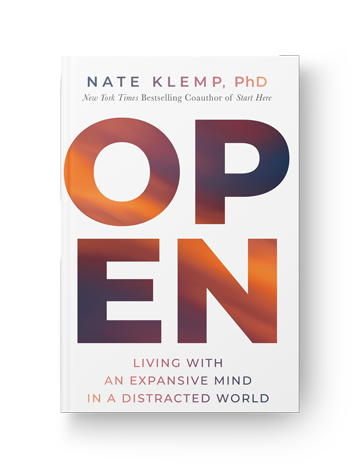
Here are five tools for creating mental space. If you want to go deeper, check out my new book with Sounds True on the topic called OPEN: Living With an Expansive Mind in a Distracted World.
1. Meditation.
You’ve no doubt heard about all of the scientifically validated benefits of this practice. It reduces stress. It boosts productivity. It enhances focus.
That is all true. But here is the real benefit of meditation: it creates more space in the mind. To get started, try it out for just a few minutes a day. Use an app or guided practice to help you.
2. Movement.
So, maybe you’re not the meditating type. That’s fine. You can still create space in the mind by setting aside time for undistracted movement.
The key word here is “undistracted.” For many of us, exercise and movement have become yet another time where our headspace gets covered over by texts, podcasts, or our favorite Netflix series.
There’s nothing wrong with this. But it can be powerful to leave the earbuds behind every once in a while and allow the mind to rest while you walk, stretch, run, bike, swim, or practice yoga.
3. Relax.
When it comes to creating headspace, we moderns, with our smartphone-flooded, overly-stimulated, minds seem to inevitably encounter a problem: we’re often too stressed, amped, and agitated to open.
Relaxation – calming the nervous system – is perhaps the best way to counter this effect and create more fertile ground for opening. When we relax – the real kind, not the Netflix or TikTok kind – the grip of difficult emotions loosens, the speed of our whirling thoughts slows, and, most important, the sense of space in our mind begins to expand.
How can you relax? Try yoga. Try extended exhale breathing, where you inhale four counts, exhale eight counts. Try yoga nidra. Or, just treat yourself to a nap.
4. See bigger.
When life gets crazy, the mind isn’t the only thing that shrinks. The size of our visual field also gets smaller. Our eyes strain. Our peripheral vision falls out of awareness.
What’s the antidote to this tunnel vision view? See bigger.
Try it right now. With a soft gaze, allow the edges of your visual field to slowly expand. Imagine you’re seeing whatever happens to be in front of you from the top of a vast mountain peak. Now bring this more expansive, panoramic, way of seeing with you for the rest of the day.
5. Do nothing.
Now for the most advanced practice. It’s advanced because it cuts against everything our culture believes in. In a world where everyone is trying desperately to get more done, one of the most radical acts is to not do — to do nothing.
Even just a few minutes of this paradoxical practice can help you experience an expansion of space in the mind.
Lie on the floor or outside on the grass. Close your eyes. Put on your favorite music if you want. Set an alarm for a few minutes so you don’t freak out too much.
Then, stop. Drop the technique. Drop the effort. Just allow yourself to savor this rare experience of doing absolutely nothing.
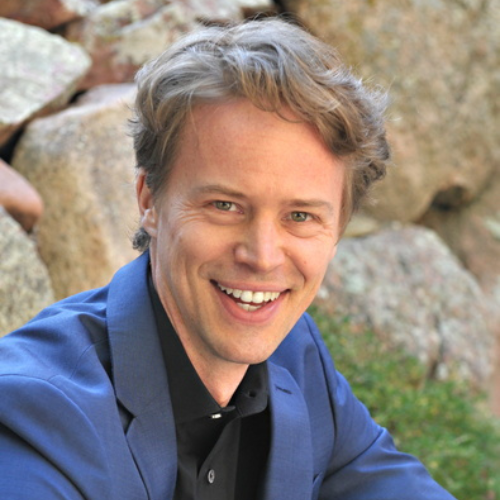
Nate Klemp, PhD, is a philosopher, writer, and mindfulness entrepreneur. He is the coauthor of the New York Times bestseller Start Here and the New York Times critics’ pick The 80/80 Marriage. His work has been featured in the LA Times, Psychology Today, the Times of London, and more, and his appearances include Good Morning America and Talks at Google. He’s a cofounder of LifeXT and founding partner at Mindful. For more, visit nateklemp.com or @Nate_Klemp on Instagram.
Learn More
Amazon | Barnes & Noble | Bookshop | Sounds True