
Search results for: Micah Mortali

The Place You Awaken
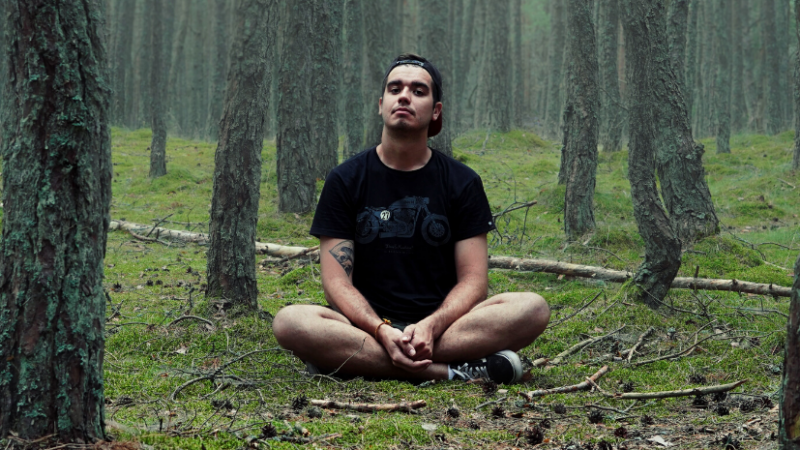
Establishing a place for regular outdoor meditation and nature observation is often referred to as a “sit spot” or “medicine spot”. Like the Buddha, who found his own tree of awakening, we too can go to nature and practice being awake to the reality of the present moment. This practice can also help us become more intimate with all the qualities of the land we live with.
“If one day I see a small bird and recognize it, a thin thread will form between me and that bird. If I just see it but don’t really recognize it, there is no thin thread. If I go out tomorrow and see and really recognize that same individual small bird again, the thread will thicken and strengthen just a little. Every time I see and recognize that bird, the thread strengthens. Eventually it will grow into a string, then a cord, and finally a rope. This is what it means to be a Bushman. We make ropes with all aspects of the creation in this way.”
San bushman
Guided Sit Spot Practice
- Go to a place in nature that is close to where you live and that you can visit regularly.
- Take a few moments to center yourself, breathing in and out, and arriving fully in the present moment.
- As you are ready begin to walk mindfully with an intention to find a spot that calls out to you, a place you can sit and deepen your relationship with this place. The spot should feel welcoming, safe and comfortable. It could be under a tree, beside a boulder or in an open space. Often, east facing spots can be nice for early morning sits.
- When you find a spot that feels good, in your own way, ask permission of that place and wait to see what comes to you. If you feel invited, sit. If not, keep looking.
- Once in your spot, sit comfortably and become as still as you can. Imagine that you are melting into the earth, becoming a part of the land. Sit for at least 15-30 minutes, noticing any movement, sounds, or other sensations and activities.
- Return often.
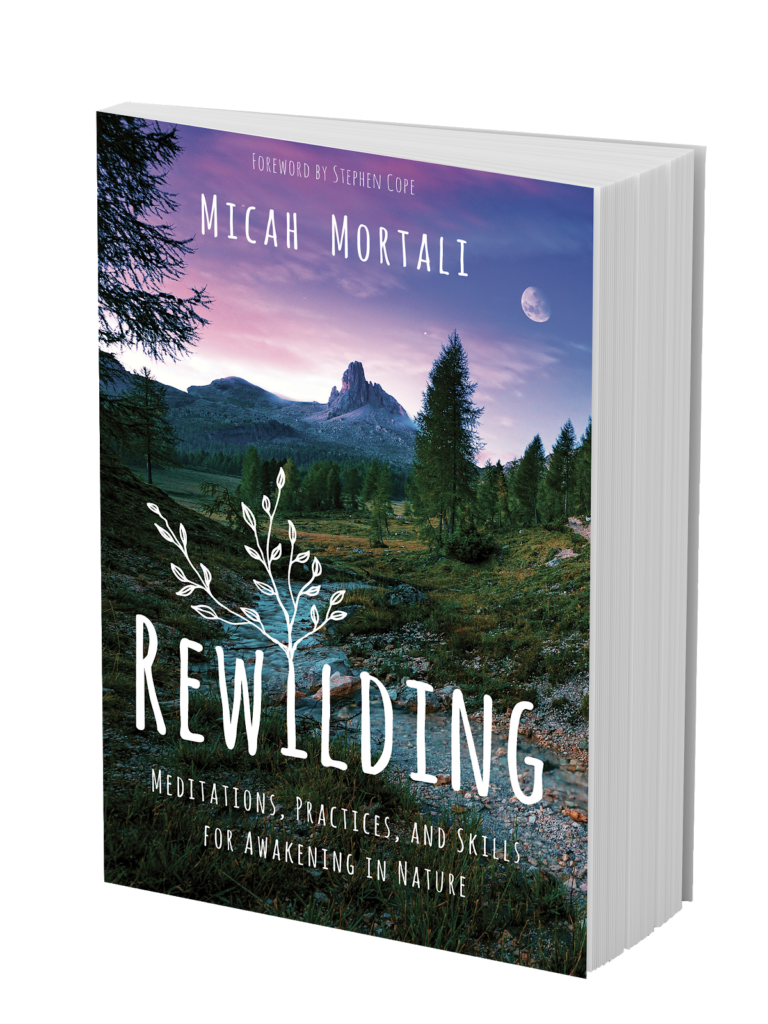
Find more practices for connecting to nature in Rewilding: Meditations, Practices, and Skills for Awakening in Nature by Micah Mortali.
Read Rewilding today!
Sounds True | Amazon | Barnes&Noble | Bookshop
Nature Meditation by a Window
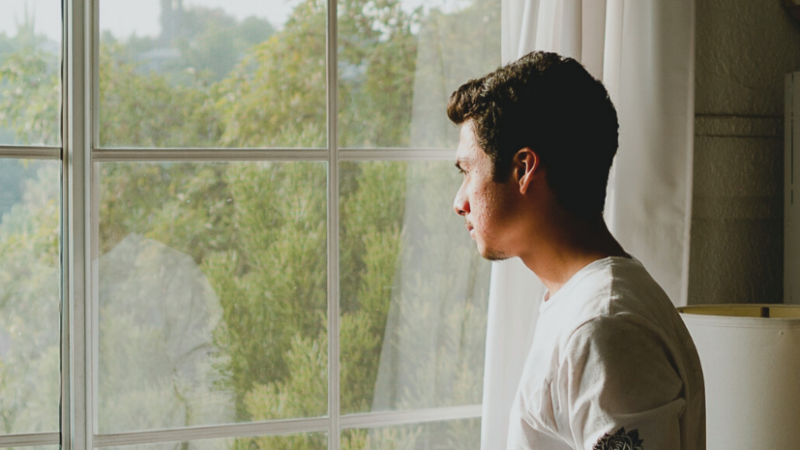
With many people home-bound, we may need to get creative in seeking ways to connect with the natural world. Sitting by an open window is one excellent practice for connecting with the outdoors, and it can be a powerful form of nature meditation as well.
“What is life? It is the flash of a firefly in the night. It is the breath of a buffalo in the wintertime. It is the little shadow which runs across the grass and loses itself in the sunset.”
Crowfoot, Orator of the Blackfoot Confederacy
- Find a comfortable seat by an open window that looks outdoors.
- Morning, during the dawn chorus when birds are most active, can be a perfect time to enjoy your morning coffee or tea as you observe a new day emerge.
- Set an intention to stay present, letting go of thoughts or stories in your mind as they arise, and instead focusing your attention on whatever is fascinating in your environment.
- Sit for at least 15-30 minutes if you can. Practice regularly to help alleviate stress, increase your sense of connection with your local environment, and awaken your senses.
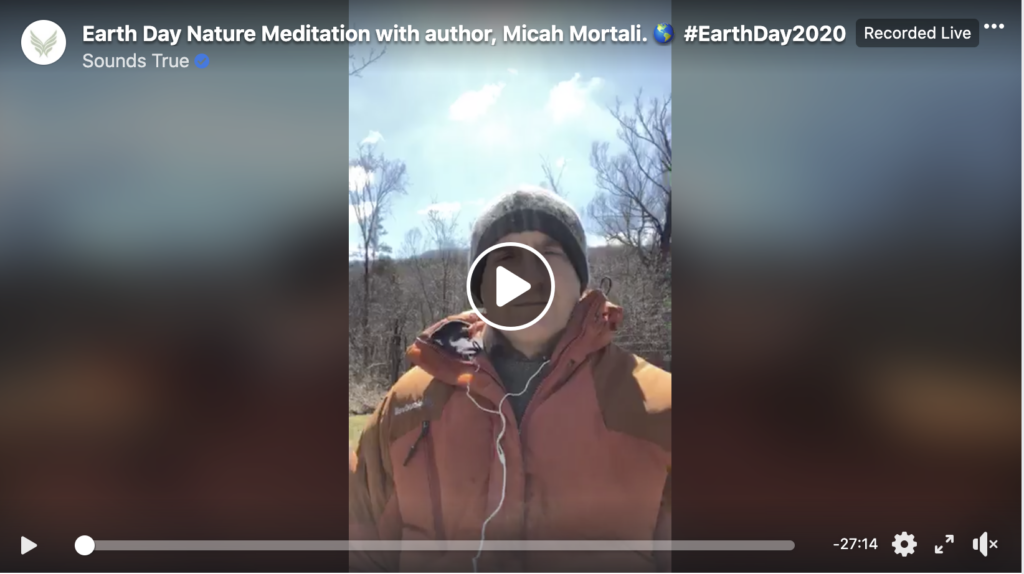
Find more practices for connecting to nature in Rewilding: Meditations, Practices, and Skills for Awakening in Nature by Micah Mortali.
Read Rewilding today!
Sounds True | Amazon | Barnes&Noble | Bookshop
The Basics of Nature Mindfulness
Ursasana: Bear Posture
Many years ago, a bear sat down next to me while I was meditating in the woods. It was an afternoon in mid-October in the Berkshires, and I had been mountain biking in my favorite preserve. I took a break from riding to enjoy the perfect fall afternoon. I was overflowing with gratitude. My life was going well.
I sat under a strong oak tree and closed my eyes. I asked Spirit to come and sit with me, to share in my heartfelt thanksgiving. I spoke the words aloud and immediately heard footsteps in the woods behind me. They got closer, but I continued with my meditation, until directly behind me, I heard a twig snap and a loud exhalation through a very big nose. I knew in that moment, in every cell of my body, that a bear was behind me.
My heart pounded, and adrenaline surged through my body. I was totally alert and aware. I very slowly turned my head to look behind me and saw shining black fur from shoulder to rump, close enough to reach out and touch. It was a large black bear. Immediately my mind provided options for survival. Get up and run away? Get up and yell to scare the bear away? Climb a tree? Those ideas seemed bad. Sit still, do nothing, and breathe? Yes, that made sense. And so I did. I slowed my breathing and meditated on the intensity of my body’s response to this perceived threat.
In my yoga I had learned that strong sensations and emotions, including fear, can be powerful doorways into meditation. Rather than turning away from an uncomfortable experience, I had learned to breathe into what I was feeling. In this case, the fight-or-flight response was a huge wave washing over my mind, body, and soul. Instead of making a big story about what was happening, I remembered to face the experience in all of its raw power. I had the thought, This is the coolest thing that has ever happened to me! I had another thought, too: This might be the worst thing that has ever happened to me! Many hundreds of hours, I had practiced breathing through the intense sensations of yoga postures, watching my experience without reaction and allowing things to be the way they are. All that training on the mat was now being put to the test in a pose I had never tried before, Bear Pose, or Ursasana.
For a moment, I wondered how it might feel to be bitten by a bear. That was not a helpful thought, so I returned to my breathing. Moments seemed to stretch into hours. The bear walked out from behind the tree and sat next to me. It was smelling me. Still I remained motionless. In time, the bear walked away. I turned to look as it walked away. It turned to look back at me. Our eyes met, and then it disappeared down the hill. I stood up and fell down, my legs weak and wobbly. I stood again and got to my bike. I climbed on board and pedaled out of those woods like a bat out of hell!
For days, I was in a state of profound shock and elation. My life was filled with magic, possibility, and power. Anything could happen. I felt incredibly alive. The presence of the bear stayed with me—even to this day. I have never been a thrill seeker or adrenaline junkie. I’ve never jumped out of an airplane or tried bungee jumping. I’ve always been drawn to more meditative outdoor activities, like canoeing, archery, or watching birds. But sitting in meditation with a bear gave me an unexpected adrenaline jolt.
While sitting with a bear is not likely to happen to many people, you may encounter other life-forms or elements that can help you awaken and experience a greater degree of aliveness. We long for connection with our relatives who roam the forests and wildlands, and we still find nourishment in their company. In mindful rewilding, we open ourselves up to the sensations and life-giving experiences that the land holds for us. Such moments of communion between you and the living earth can open doorways into a more magical, mysterious, and meaningful life. And it makes all the difference to have the right mental tools and preparation to help you ride the waves of powerful energies you will encounter in both the human and the more-than-human worlds.
When sitting with that bear, I used a technique we lovingly call “BRFWA”: Breathe, Relax, Feel, Watch, and Allow. You might use BRFWA on your first walk in a park or a wood that is new to you. You might use it during your first solo camping experience or when you see an animal that frightens you. I once used BRFWA when I got caught in a rip current while swimming off the Big Island of Hawaii. It allowed me to remain calm and to act skillfully, possibly saving my life. In any survival situation, the first advice is almost always to remain calm and think, not to react or panic. But how we are supposed to do that is not often explained.
By practicing mindful rewilding, you are not looking to put yourself in a survival situation, though many of these skills can help you feel more confident and capable when you’re away from the conveniences of modern society. Inevitably, the more time we spend outdoors, the more likely we are to come up against our comfort zone or find ourselves in a situation where remaining calm and being skillful are necessary. In these moments, BRFWA can be a great ally.
I recommend that you use BRFWA regularly as a moment-to-moment practice. Using it daily will support your developing a general state of mindfulness. You can also use BRFWA to go deeper into a pleasant experience. Maybe you practice it when you take a walk or when you dip your feet in a cool stream or when you feel a fresh breeze moving through your neighborhood. Practice BRFWA regularly so that when something truly challenging happens, it is second nature for you, as it was for me when I had my encounters with the bear and the rip current.
BRFWA: Breathe, Relax, Feel, Watch, Allow
To begin working with BRFWA outdoors, try the following steps:
- Go outside. Find a place where you can sit comfortably and have a view of a natural, outdoor space. (This might also be the place where you want to establish your daily nature meditation.)
- Get grounded. Feel your sitz bones and imagine they are plugging in to the earth. As you ground down through your seat, also lengthen your spine and let it rise up through the crown of your head. Imagine that your spine is the trunk of a great tree and you are the bridge that connects the heavens and the earth.
- Breathe. Soften your belly, and slowly deepen your breathing with each inhalation and exhalation. If possible, breathe in and out through the nose. A good ratio for this breath is to inhale for four counts and hold the breath gently for seven counts; then exhale for eight counts, and repeat the cycle. As you breathe, notice the qualities of the air. What is the temperature? Is it hot, cold, or somewhere in between? How moist or dry is the air? What can you smell? Leaves, pine needles, the smoke from nearby fireplaces? In which direction is the wind moving? What can you hear? Your breath, your heartbeat, your joints settling? Branches creaking against each other, leaves rustling in the breeze, dew dripping to the ground, chipmunks or squirrels scampering, crows cawing, pigeons cooing, an airplane passing overhead?
- Relax. As you breathe, begin to consciously scan your body. Notice any places where you are holding tension. Focus on each of these places, as you continue to breathe calmly and deeply, and invite these places to soften and let go. Maybe your forehead is tense, and your brow is furrowed. Maybe your shoulders are tight and raised with tension. Perhaps your jaw is clenched. See if you can allow your jaw to relax, so that your teeth are parted. Invite your tongue to sit heavy and relaxed in your mouth, with the tip of the tongue resting against the ridge of skin behind your two front top teeth. With each exhalation, feel tension melting out of your body, mind, and spirit. Relax into the support of the earth element. Feel the earth beneath you and within your bones and muscles.
- Feel. As you continue to breathe and relax, notice what you can feel. Notice your body and what your body can feel—the air on your skin, the earth against your buttocks and legs, the light on your skin or coming through your clothing. Notice your heart and how you are feeling right now, not from a place of judgment, but from a place of compassion for yourself, and from a larger perspective, from your witness. Notice how the breath moving in and out helps you to feel more. This is one of the great secrets of yoga: the more deeply you breathe, the more of your own life you can feel.
- Watch. Be the witness. Observe your experience and allow as much space as you can for whatever is happening to be the way it is. Simply observe the land around you. Notice movement wherever it may be. Watch the play of light and the subtle movement created by the atmosphere’s constant state of motion. Watch everything, and be curious about any life you see, whether birds in the bushes or trees, ants crawling on the ground, or a squirrel leaping from limb to limb. When you come into the present moment using these steps, doors of perception will open to you. You will see the world through new eyes.
- Allow. Let it be. Let the moment be exactly the way that it is. Let go of grasping to your idea of what this moment should be. Let go of any aversion to things as they are. See if you can simply allow this moment to be as it is, and give yourself the opportunity to experience this moment right now in its pure expression. No matter the weather, no matter the terrain, can you allow this living earth and your relationship with it to be the way that it is? Moment by moment, can you keep letting go of your opinions, preferences, and judgments? It’s not easy for any of us, which is why we practice. This awareness is something to come back to moment after moment after moment, always beginning again.
- This is an excerpt from Rewilding: Meditations, Practices, and Skills for Awakening in Nature by Micah Mortali.

Giving Thanks to the Earth
Many indigenous cultures refer to the more-than-human worlds as people. Clouds, trees, stones, plants—all belong to their own community, speak their own language, and have their own relationship to the spirit that moves through all things. The first time I recognized these more-than-human communities and felt their presence strongly as an adult was when I had spent a lot of time in the woods and became fascinated with trees. I noticed that in some places, many American beech trees grew together, while in other places, eastern hemlock congregated. In the beech groves, the simple-toothed leaves quaked in the breeze; their smooth, grey trunks reminded me of the mallorn trees from The Lord of the Rings. I couldn’t help but feel the presence of elves in those beech groves!
In the hemlock groves, the shadows were deep and the earth moist. The deep green boughs stretched and gently bobbed on the breeze, light, buoyant, and mysterious. The hemlock groves were hushed. Silence and watchfulness permeated the hemlocks’ shadows. Families of white pine created sun-toasted auburn carpets of needles, soft and aromatic in the afternoon light. Their trunks climbed high into the sky, and their bluish-green pine needles shone bright and happy in the sun. A feeling of optimism and joy seems to ring out when white pine needles shimmer in the sunlight. Under these mighty trees were perfect places to lie down or to sit and lean against trunks, perfect places to take in the tranquility of the land.
Looking into the distance, I could see patches of forest green on mountain slopes where communities of evergreens lived, and then the grey patches in the fall from oaks and maples that had lost their leaves. Suddenly it hit me: these are communities, tribes, families. Before this, I had not really seen or felt the profound reality of community that exists among trees of the same species, trees that congregate. Now, when I look out at hills or mountains in the distance, I see the tribes of tree beings whose presence creates a tapestry of color and texture all across our forested lands.
Trees communicate and support one another. Forest ecology expert Peter Wohlleben refers to the nutrient and information exchange that exists among trees in the microbial network underground as the “wood wide web.” There is evidence that trees work together to keep elder trees alive and that they warn one another of danger. We are symbionts with trees, relying on the oxygen they provide while they rely on the carbon dioxide we exhale. There is a give and take, a reciprocity, that binds us to the trees, plants, and other members of our earth community, all of whom share the atmosphere, nutrients, and waters of this living earth. To think of trees as objects denies what they are. To think that way minimizes and flattens the complex and mysterious reality of their “treeness.” This objectification of the living earth, whether it be trees, minerals, or animals, also flattens our consciousness and experience, causing us to miss out on so much of the beauty, love, and wonder to be found in relationship with the earth. When we think of the earth as composed of so many life-less objects, we give ourselves permission to treat them as such. If we take the time to slow down, to be mindful and observe the land, trees, and other crewmates of spaceship Earth, we strengthen our ability to see the reality of life’s living connections.
Reciprocity
Keep close to Nature’s heart … and break clear away, once in a while, and climb a mountain or spend a week in the woods. Wash your spirit clean.
JOHN MUIR
Rewilding is a way of seeing and being in relationship to life, and it can include learning ancestral skills for survival. Tom Brown Jr., a great tracking teacher, emphasizes the profound role gratitude and thanksgiving played in what he learned from his teacher Stalking Wolf, a Lipan Apache tracker and spiritual teacher. To truly feel and connect with the miracle of any living thing, any gift of the Creator, whether a piece of wood being carved into a sacred pipe or a plant or animal being harvested for food, one must honor the other being’s sacrifice and give thanks for what is received from that being. All of life is an exchange of energy. To live, all living things must consume, and in turn, be consumed. There is no escaping this.
Of all the world’s wonders, which is the most wonderful?
That no man, though he sees others dying all around
him, believes that he himself will die.
YUDHISHTARA, The Mahabharata
To be awake to the wonder of life is to be in a state of constant thanksgiving, for this breath, this bite of food, this caress of wind, this sunset, this chance to grow and serve others. A society whose people are involved in harvesting their food from their environment will likely be a culture that appreciates and that values thanksgiving. I believe that our collective loss of reverence for nature is in part due to our disconnect from the origin of our food. Pulling a potato or carrot out of the soil provides a sensual, embodied experience of taking life. When we take life, we have a natural inclination to want to give back, to restore balance.
We all need to embrace the ethic of thanksgiving again so that we don’t take the biodiversity of earth for granted. We can’t pretend that the water and air we pollute aren’t the water and air we rely on for our survival, for our health and well-being. A great start for a thanksgiving practice is with the breath, the thing we rely on most and most immediately. The birds who fly in the sky fly on our very breath. The air sweeps all around us, moving clouds, bringing snow and rain, making waves, and flowing in and out of our bodies with the oxygen that allows us to exist. The air we breathe moves the leaves in the trees, creating beautiful sounds that soothe our souls. We can go weeks without food and days without water but only a couple of minutes without the gift of breath. Throughout the world, there are cultures that hold the air and the wind as holy, as life-giving forces. The entire yoga tradition revolves around the fundamentals of breath, which can unlock expanded states of awareness and foster deep insights.
Giving Thanks
When I exhale, I know that the carbon dioxide flowing out of me will be absorbed by plant life and that the oxygen they exhale will flow into me. In my lifetime, I will ingest many living things, fruits, vegetables, animals, and water, and one day, my body will return to the earth, and other living things will eat me.
We are only stewards of our bodies for a time. Every seven or so years, every molecule in this body will have been replaced, so that the me I think of as me is stable only in my mind. Who I really am is living in a dynamic state of reciprocity with the cosmos. Our planet, which includes us, is made up of elements generated in ancient star explosions. So, when we walk barefoot in the grass, stand at the entrance to a forest, or look up at the cool moon on an autumn evening, we can acknowledge that we are not simply receiving beauty from a heavenly body, that there is more going on. Through mindfulness we can hold an awareness of our situation, one in which we are suspended between using and being used, between eating and being eaten, between enjoying and being enjoyed.
When did people stop talking to the earth? How does one thank the moon for being all that the moon is? I’ve made a habit of speaking to trees, stones, salamanders, the wind, and any other relative I see outside. I speak to everything in nature. Why? When I speak to the forest, it feels as if my words are resonating not only in the cavities of my human body but also through the air, back into my eardrums, and bouncing on trees, leaves, and stones. When spoken from the heart to the living earth, my words express love for what I experience as my greater self. I know that hemlocks and stones do not understand the English language; I am not anthropomorphizing them. Yet I feel fuller and more connected when I give myself permission to speak to the land. When I converse with the earth, sometimes the wind blows suddenly, as if in response, or a squirrel will throw a pine cone out of a tree, which also feels like some kind of answer. I don’t think we need to feel so isolated on this earth, so cut off and separate. We can honor our reciprocity with all of life by opening up the channels of communication with the more-than-human world.
Practice of Giving Thanks to the Earth
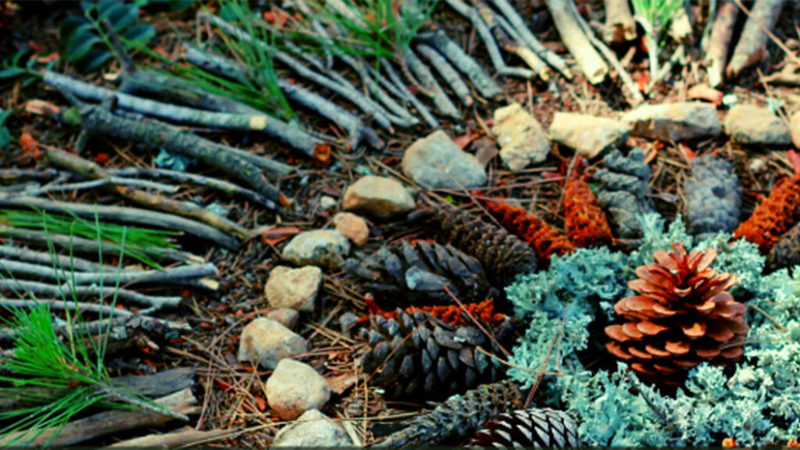
The next time you experience a perfect sunset, a refreshing walk through new fallen snow, or the gift of seeing a wild animal, consider offering a gesture of gratitude to the living earth. Drawing your hands to prayer in front of the heart and bowing to the light in that manifestation of the universe, you can simply say “thank you.” You might offer a small token, such as an acorn, pine cone, crystal, or small pebble, to show your thanks. You could also make an earth mandala, creating a circular symbol with natural objects you gather, and offer it with gratitude. As the days and months go by, the mandala will be received into the earth. You could also take a handful of water from a pond, lake, stream, bay, or ocean and speak your words of love and gratitude into the water, allowing your prayer to slip through your fingers and become one with the water of the earth. Maybe you would like to burn sage, palo santo, dried cedar, or another ceremonial incense of your choice, placing your intentions in the burning ember so that the rising smoke carries your prayer of gratitude and love to the heavens. These are small gestures, but they are powerful. These actions build a habit of focusing on the many ways we are in a deep state of interbeing with all of creation.
This is an excerpt from Rewilding: Meditations, Practices, and Skills for Awakening in Nature by Micah Mortali.


Topophilia: A Love and Appreciation for Where We Live
Topophilia
Rewilding allows you to see your environment with new eyes, sometimes as if for the very first time. You become more intimate with all its life-forms and sometimes see beyond the visible, connecting with a greater spirit, or presence. In his book The Nature Principle, Richard Louv discusses “place blindness,” which afflicts people who live so much of their lives indoors or in front of screens that they do not look up to see the land they live on. As with a psychological state such as inattentional blindness or perceptual blindness, these people do not perceive what is right in front of them, whether that is a horizon, a rock, a landscape, or a tree. Whether they are overwhelmed, overstressed, or preoccupied by other stimuli, in effect they become sealed off from the elements, the seasons, and the real world of the living earth, and they lose out on the benefits of a vibrant and reciprocal relationship with nature.
Because place blindness inevitably leads to a disconnection with the living earth, it also leads to a lack of caring and interest in the planet’s well-being. Future generations will not value and care for the earth if they have little or no actual relationship with it. People will not work to reverse climate change if they are so rarely outside that they have no embodied experience of its reality. So how do we overcome place blindness? We embrace mindfulness and take it outside with us. The more time we spend out on the land, exploring and learning about the different plants and animals, the natural history and ecology, and simply enjoying and getting to know the contours of the living earth, the more bonded we’ll feel to the places we call home. The more intimate we become with the land, the more we’ll grow to love and cherish it. The word land can be a vague, general term, but as you get to know a place, you discover its individuality, its individual trees, stones, birds, and landmarks. Walking along a favorite trail as the months and years go by, I watch little saplings grow. As you walk, I encourage you to bring your full, penetrating awareness to the reality of life as it is. This kind of intimacy with place is as natural as can be. We’ve lost it only in the last hundred or so years. But we can get it back and be enriched again.
Some call this love of land topophilia. Every spot on a map has a unique quality and personality. Bioregionalism is a movement that seeks to understand the watersheds, geography, ecology, natural history, human history, and other layers of knowledge that make up the richness of a place. Climate change compels us to become more bioregional so that we can address some of the nasty repercussions of a society crumbling under the compounding costs of extreme weather events, food production problems, mass migrations, rampant pollution, and social strife.
Stewardship begins with you and me.
Tips for Overcoming Place Blindness
- Walk outside. Whether you live in a populated neighborhood or in a more isolated area, walk outside every day. While you walk, open your senses, connect with your breath, and pay attention to movement on the land and in the sky.
- Become an amateur naturalist. Learn about the trees, plants, animals, insects, and other features of the land where you live. Use field guides to learn what trees grow near your home. Learn about the wild edibles that grow near you. Pay attention to the birds. Are there watersheds nearby? Where does the water flow from? Where does it flow to?
- Join local organizations that support the land. Make friends with local conservation, land management, and other environmental organizations that are active in your area. Perhaps there are walking or hiking groups, foraging clubs, craftspeople, or other groups you can learn and explore with.
- Limit your screen time. When you are outdoors, set a strong intention to experience the earth directly through your own senses. Silence your phone and put it away. Resist the urge to capture everything with a picture and instead take mental pictures of what you see. Practice letting go of the need to document every experience. See if you can reconnect with what it is like to experience life. Slow down and notice, as if for the very first time.
This is an excerpt from Rewilding: Meditations, Practices, and Skills for Awakening in Nature by Micah Mortali.

