

Help Children Relax at Bedtime

Looking for more great reads?


Excerpted from Good Night Yoga. Written by Mariam Gates and illustrated by Sarah Jane Hinder.

Mariam Gates holds a master’s in education from Harvard University and has more than 20 years’ experience working with children. Her renowned Kid Power Yoga™ program combines her love of yoga with teaching to help children access their inner gifts. See kidpoweryoga.com.

Illustrator Sarah Jane Hinder creates acrylic artwork for a variety of children’s book, including Good Night Yoga, Good Morning Yoga, The Three Little Pigs, and The Elves and the Shoemaker. She lives in Manchester, England, with her husband and two chihuahuas. See sarahjanehinder.com.
Turning to my Filipino Roots to Tend to Womb Loss
October is a meaningful month for me as it honors two important parts of my identity. It is Filipino American History Month, a time to acknowledge and honor the presence and contributions of Filipino Americans. Although my parents immigrated to the United States from the Philippines in 1980, records show that Filipinos were present here as early as 1587, landing in present-day Morro Bay, California as part of a Spanish galleon. In an interesting moment of alignment, I am writing this to you from Morro Bay, feeling the palpable power of the land and seeing the sacred 600-foot-tall Morro Rock–known as Lisamu’ in the Chumash language and Lesa’mo’ by the Salinan people–standing proudly just outside the window of our Airstream trailer. October is also Pregnancy and Infant Loss Awareness Month, a time to increase awareness about and honor those of us who have endured such loss- what I often refer to as womb loss.
This October is particularly meaningful with my book, To Tend and To Hold: Honoring Our Bodies, Our Needs, and Our Grief Through Pregnancy and Infant Loss, officially launching on October 22. In it I share how my identities as a Filipina American and bereaved mother intertwine, and how valuable it can be for survivors of womb loss to turn to their cultural traditions for support as they grieve and as their postpartum bodies return to a non-pregnant state. How I came across this online essay and found solace in the language of my ancestors who use terms to describe miscarriage as “someone from whom something was taken away” rather than placing blame with the prefix mis- which means wrongly or badly. I did not carry my pregnancies wrongly or badly. Loss was something that my body experienced.
The following is an excerpt from To Tend and To Hold that I hold dear as it shares a traditional Filipino dish I grew up eating and that I share now as a postpartum doula to offer comfort and nourishment to those who are postpartum, both with living children and after loss. I hope it may offer you comfort as well, no matter if your experience of womb loss was recent, in the past weeks, months or even many years ago. My heart is with you and please know that you are not alone as you grieve and as you heal- at your own pace and in your own way.
~
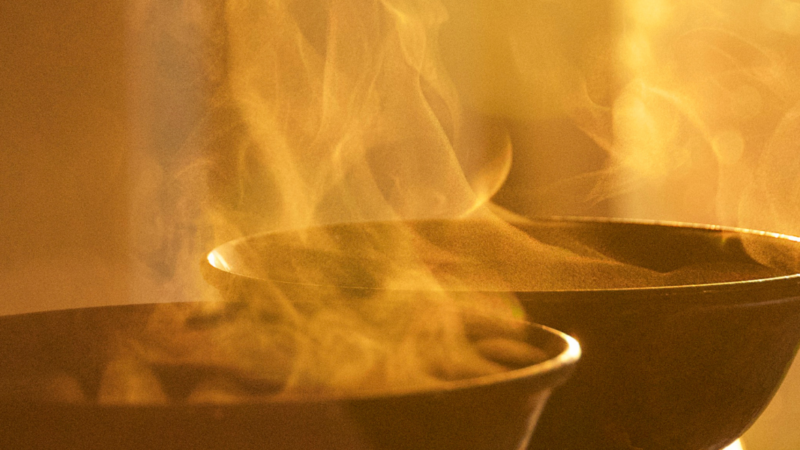
I recently cooked this recipe for champorado, a Filipino rice porridge, for my beloved friend Katrina on a very tender anniversary, the due date of one of her children and the death date of another. Her child, Zeo Thomas, would have been born that day had he not died in the womb at five months gestation. It was within the same year of his death that her second child, Solis Vida, died in the womb in the first trimester. In truth, Katrina had been bleeding for over a week to release her second pregnancy, but as she bled through Zeo’s due date, she felt an intuitive pull to honor this same date as Solis’s death date. I thought of my friend as I made my way slowly through the grocery store. Though it was crowded and busy, I felt cocooned in my thoughts and intentions for her—how I wanted to help her feel seen and held during this difficult time—and I found myself gathering each of the ingredients in a mindful way that felt like the beginning of a bigger ritual. Knowing I was going to cook for her to honor her, her babies, her grief, and also her longings added a layer of reverence to what would otherwise be a standard grocery run. Later as I cooked the porridge in her home, I channeled my love and condolences into each step. And when I finally brought the warm bowl of champorado to her and saw her reaction, it was my turn to feel honored. Honored to be there with her. Honored to tend to her. And with a dish we both knew from our childhoods. She dubbed it “postpartum champorado,” and so it shall be known.
Warm and soft, rice porridge is one of the best postpartum foods as it is easy to eat, warming to the body, and gentle on the digestive system. Its very nature is to offer comfort. In my opinion, champorado, a Filipino chocolate rice porridge I grew up savoring, is one of the most heartwarming dishes, with the cacao tending as much to the emotional heart as to the physical body. It can be offered any time of day for both a filling meal and a gentle reminder that there is still sweetness in life even amidst grief.
In this nourishing version, cacao powder is used in place of cocoa so that we may benefit from all that this superfood has to offer, including iron to help rebuild red blood cells, flavonoids to improve blood flow, and magnesium to ease anxiety and depression. In addition to being nutrient-rich, cacao is also known to lift the mood. If the thought of preparing food feels beyond your current capacity at this moment, consider sharing this recipe with a partner, postpartum doula, or other support person and asking them to cook it for you. Additionally, if you are currently pregnant, please consult your health-care provider before consuming cacao as it contains caffeine.
- 1 cup sweet rice (also called glutinous or sticky rice) or sushi rice
- 5 cups water
- 1/4 cup cacao powder
- 1/2 cup brown sugar
- 1 tablespoon unflavored protein powder (optional)
- Condensed coconut milk for topping
- Cacao nibs (optional)
Rinse the sweet rice several times until the water runs clear when drained.
Combine rice and water in a pot over medium-high heat. Bring to a boil, then reduce heat to medium and continue to cook until the rice is soft and the porridge thickens (about 20 minutes), stirring often to keep from sticking to the bottom of the pot.
Add cacao powder, brown sugar, and unflavored protein powder. Stir to combine, then remove from heat.
Drizzle condensed coconut milk (or other milk of choice) and top with cacao nibs. Serve hot.
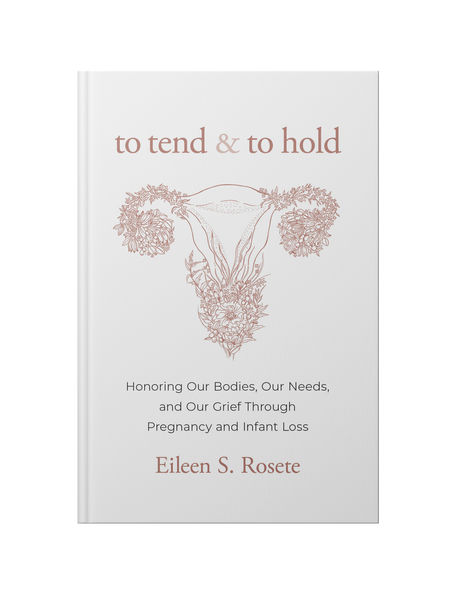
This is an adapted excerpt from To Tend and to Hold: Honoring Our Bodies, Our Needs, and Our Grief Through Pregnancy and Infant Loss by Eileen S. Rosete.
To Tend and to Hold
Amazon | Barnes & Noble | Bookshop | Sounds True

Eileen S. Rosete
We Dare You to Rest This Holiday Season

When to say “No” & “Yes”
One of the most exhausting stress loops for women starts with saying “yes” when we feel “no”. Becoming your most authentic self is the first step to learning what a “no” and a “yes” feel like in your body. We often tell women to say no more, but equally as troublesome is that we also don’t feel and then follow our yeses.
Here’s a quick way to practice sensing what “yes” and “no” feel like to you:
- Put your hand on your heart and gut.
- Place your attention at the space between your eyebrows (your third eye).
- Inhale from the space between your eyebrows to the base of your spine, while mentally saying “Sooooo.” Then exhale from the base of your spine to the space between your eyebrows while mentally saying the sound, “Hummmmm.” Repeat twice more.
- Be still as you rest your attention on your third eye for 20 to 30 seconds.
- Call up a question you want an answer to, and see if you feel a “yes” or “no.”
For women who have lots of decisions to make, like mothers, I often suggest making a list of all the things stressing them out, and then, on the same day every week, doing this practice, seeing if they get a “yes” or “no” for each item on the list. This is also a great practice to do weekly when you’re pregnant, because giving birth centered in your true self, knowing your “yes” and “no,” is the best gift you can give your baby.
Using this practice to help make decisions will help you stop overdoing. You begin with feeling, drop your ego, and then, from your true nature, make decisions that end the worn-out feeling. Beware of mistaking things you love to do as a “yes.” For example, many of the creative moms I work with love to cook, but when they use this practice to ask whether they want to stay up cooking cupcakes late at night for their children’s school when they have work the next day, the answer they get might well be “no.”
Sometimes you may be faced with a difficult “no”: your inner wisdom will tell you that saying “no” to something will liberate time, but saying “no” may not feel good right away or may disappoint someone. If this happens, I encourage you to say “no” anyway. If you want to feel well-rested, you need to make the choice that supports your wholeness.
Love Yourself First
Most of us have heard flight attendants on an airplane say, “Put your own oxygen mask on first, and then secure your loved one’s.” This is an important message that well-rested women get in every bone of their bodies: love yourself first. The first thing your loved ones need is a healthy you. Here are two ways to do that.
- Give Kindness
- When you’re spinning in mental loops and stressed out, it’s hard to be kind to yourself or others. But as I always say after yoga nidra, I feel like I drank a cup of kindness. To capitalize on and reinforce this feeling, repeat this loving-kindness meditation.
- Say to yourself:
- May I be happy.
- May I be safe.
- May I be free of physical pain and suffering.
- May I be able to recognize and touch harmony and joy in myself.
- May I nourish wholesome seeds in myself.
- May I be healthy, peaceful, and strong.
- Say to yourself:
- When you’re spinning in mental loops and stressed out, it’s hard to be kind to yourself or others. But as I always say after yoga nidra, I feel like I drank a cup of kindness. To capitalize on and reinforce this feeling, repeat this loving-kindness meditation.
Notice how you feel in your body. When you’re ready, you can move on to saying the words for others: May (name of a loved one) be happy. May (he/she) be safe.
- Go on Wonder Dates
- Schedule quiet time for yourself. My friend and colleague Jeffrey Davis, of Tracking Wonder, a creative branding company, loves to say, “Wonder is not kid’s stuff. It’s radical grown-up stuff.” That’s right, taking time for wonder is an essential multi-vitamin for adults, too. It helps clear your mind and relax the body.
- What’s wonder? It’s a time to be curious, to not know something. It’s the gratitude and amazement we feel when we see a shooting star or a beautiful full moon. Try finding a quiet space to read poetry, or sitting in a tree and then journaling about what you see and how it makes you feel. Many spots in nature call up wonder. Wonder sparks ideas, so the more time you spend in wonder, the juicer you will feel when you return to your everyday life.
- And if you think you don’t have time, think again. Jeffrey has two little girls, and as he says, he “sculpts time” for wonder by intentionally planning space to wonder into his calendar.
Looking for more great reads?

Excerpted from Daring to Rest, by Karen Brody.

Karen Brody is a speaker and the founder of Bold Tranquility, a company offering yoga nidra meditation for the modern women via downloadable products and workshops. Her work has been featured in Better Homes & Gardens, and she’s a regular contributor to The Huffington Post. She’s also a critically acclaimed playwright. Karen had a long personal history of severe panic attacks until she found yoga nidra meditation over a decade ago. At that time, she was a sleep-deprived mother of two small children on anti-anxiety medication. She signed up for a yoga nidra meditation class simply looking to lie down for a nap. What she got was “the best nap of her life.” As she continued to practice yoga nidra regularly, her deep fatigue lifted; she wrote a critically acclaimed play, got off anti-anxiety pills, and started to teach this yoga nidra “power nap” to every exhausted mother she knew.
Going Deep into Silence
Over the last three years, I have immersed myself in the teachings of Adyashanti. I recorded and edited his most recent audio program and book, Resurrecting Jesus; I’ve attended several weekend intensives in the Boulder area, and I’ve listened to countless satsang recordings and online broadcasts. But until a few weeks ago, I had never attended a silent retreat—with Adya or any other teacher.
Now, I can be a loud guy—just ask my family. If things around me (or inside me) are noisy, I tend to respond with more noise. Still, on retreat, despite my fears, I found it easy to slip into silence. And the more I let go into the daily pattern of silent sitting—six sitting periods of 30 to 40 minutes each, the first at 7:30 in the morning and the last at 9:30 at night—the more I felt the noise inside me abate.
The retreat was held in North Carolina, and most days the skies were solid gray, with a light rain falling. Though the oaks had not yet unfurled their leaves, the redbud tree in the courtyard of the dining hall was in full bloom, and when the rain abated, its branches hummed with fat, fuzzy bees. At each meal, eating in silence, I positioned myself so I could see that redbud tree through the banks of windows.
I loved the morning dharma talks and evening satsangs, when retreat participants could bring their questions to the microphone and dialogue with Adya. I loved to sit in silence, sensing that vast space inside as it slowly emerged into consciousness. (Of course, it had been there all along, but thoroughly hidden by the noise of activity, both inner and outer.) And I loved that tree.
One evening, answering a question, Adya said, “Allow the world to find itself in you.” For some reason I couldn’t quite pinpoint, these words resonated deeply for me. There were times, rising from meditation and walking into the soft light of afternoon, when it did feel that the trees in bloom and the loamy smell of the earth and even the birdsong all arose and subsided within me—which is to say, within that open, aware spaciousness we share. As the days flowed by and the silence inside grew more accessible, I noticed something. From that silence, words began to emerge, images rise slowly to the surface. The world found itself in me, and I found this poem.
The Redbud Tree
The fat bees browse
the spindled branches of the redbud tree,
their humming heavy as fruit.
They dwarf the purple blossoms.
Late afternoon, and when
the clouds part, the light
pours thick as honey over the blossoms,
the bees, the mossy branches.
Everything is heavy
and everything barely here.
Long before my birth, bees swarmed
the flowered tree,
bees already ancient
and born again each spring,
rising among the blooms.
And someone—dust now—stood
where I stand, and stared
at their slow dance
among the delicate
petals the wind scatters.

How Self-Compassionate Are You?
Do you have a critical voice? What do you find it saying to you?
This video is a candid, vulnerable and compelling portrait from our own folks here at Sounds True. We get their take on their own journey with self-compassion. Discover the power of self-compassion and learn simple practices to transform your moments of moments of suffering into moments of love.
4 Tips to Make Your Holiday Parties Better for Non-Drinkers and Drinkers Alike

It’s okay not to drink. In fact, it’s normal, a fact that many people tend to forget, especially around the holidays.
My husband, Pat, quit drinking thirty-three years ago, and he is not at all shy about telling people he’s in long-term recovery. Yet even close friends and relatives who know his story still try to foist alcohol on him.
At holiday parties, people insist him to try “at least a sip” because they brought the alcohol as a gift, or express incredulity at Pat’s description of himself as an alcoholic. “I never saw you drunk or out of control,” one woman once said, “so how could you be an alcoholic?”
Even at a New Year’s Eve party, another friend offered Pat a glass of champagne. When he replied, simply, “No, thanks,” this friend took the opportunity to extol the virtues of moderation.
Moderation may work for some but it does not work for Pat and an estimated 23 million people in this country who are in recovery from alcohol or other drug addiction — including our son Ben, who recently celebrated his tenth year of recovery. Alcohol works its poison slowly, but poison it is, in large and small amounts for those who are susceptible to its addictive effects – and for untold others who get caught up in the party spirit and overly imbibe.
During this holiday season when alcohol flows so freely at intimate family gatherings, holiday parties, and New Year’s Eve celebrations, here’s a short list of suggestions for hosts that will make life easier for non-drinkers and drinkers alike:
- Respect “no” as an answer
When someone says, “No thank you” to an offer of beer, wine, or spirits, don’t push, nudge, cajole, or question. Take no for an answer, point to the table containing the different beverages (be sure the non-alcoholic selections get equal space) and say, “We have a variety of non-alcoholic and alcoholic drinks, what can I get one for you?”
- Get creative with these non-alcoholic beverage ideas
- Cranberry or pomegranate juice with sparkling water (Perrier or sugar- and calorie-free waters such as Refreshe or La Croix )
- Fruit or vegetable-infused water (watermelon, strawberries, cucumbers, mint, lemons, limes, the list goes on and on) are super hydrating and pretty to look at, too.
- It’s always a good idea to offer several different sodas (ginger ale, colas, root beer, 7-up, sugar free-sodas) or flavored sparkling waters.
- Forget punches or pitchers of beverages (eggnog for example) that are laced with alcohol; they’re too easy to mistake as non-alcoholic.
- Garnishes such as lemons, limes, and mint are fun additions to non-alcoholic as well as alcoholic beverages. Put them in little bowls on the beverage tables.
- Keep nutritious snacks stocked to curb cravings
Nutritious, high protein snacks help control blood sugar, which can drop around party time (typically late afternoon) and trigger cravings. You don’t have to get fancy–try crackers and cheese; nuts or seeds (cashews, walnuts, almonds, peanuts, sunflower or pumpkin seeds); bruschetta with tomato and basil; or antipasto plates.
- Set out a board game or puzzle on a coffee or dining room table
We always have a jigsaw puzzle going and people love to gather around and concentrate on something other than drinking and small talk (of course, drinkers are also welcome).
Remember: It’s okay not to drink. In fact, it’s “normal.” And for many millions of people, not drinking is in fact life-saving. I encourage you to try some of these tips this holiday season and throughout the year at any and every social gathering.
Looking for more great reads?

Excerpted from The Only LIfe I Could Save, by Katherine Ketcham

Katherine Ketcham has been writing nonfiction books for over 30 years and has coauthored 16 books—10 of which are on the subject of addiction and recovery. Her books have been published in 16 languages. Ketcham has led treatment and recovery efforts at the Walla Walla Juvenile Justice Center, and in 2002 she founded Trilogy Recovery Community. She lives in Washington State. Her newest book, The Only Life I Could Save, is being published by Sounds True and will be on available on April 1, 2018.