
Search results for: Terri Tate


The Trauma-Trigger Cycle
When you are stuck with old unprocessed experiences living inside you, they can create what I call a trauma-trigger cycle because they are still very much alive in our systems.
Here’s my analogy to help you understand how this works and why it causes so much trouble. Imagine that you have a very difficult experience, for example, having to say goodbye to a sick pet. All of the details in the form of individual feelings, smells, images, sounds, and more get bundled up and deposited into a metaphorical glass trauma capsule—which gets stored in the body. It sits there with all of the old feelings we experienced at the time the event happened. While you might not be aware of it constantly, you are likely feeling those emotions at a low level all the time. When any current situation reminds you of any of those details hanging out in the capsule—either consciously or subconsciously—the old trauma gets “poked,” or reactivated. This is how we get triggered. Being triggered can bring up flashes of those memories, including images, feelings, and any sensory stimuli.
For the most part, except in certain cases of post-traumatic stress disorder (PTSD) from major life events, where sometimes the trigger is known, this trauma-trigger reaction actually happens at a subconscious level, outside of your awareness. Even in obvious situations, you may think you know what the trigger is, and try to avoid it, but it may be something totally different that got stuck in the metaphorical glass trauma capsule. Often, people come to me and say, “Nothing set this off,” “I’m depressed for no reason,” or “I suddenly started feeling terrible but nothing happened.” While this may seem true, I can bet on the fact that while the bad feelings might seem random, they are being triggered in some way that you simply haven’t yet identified. Triggers can be foods, colors, smells,sounds, weather, or anything, really! Finding and resolving triggers can become almost an entertaining game if you let it.
As you can imagine, this entire trauma-trigger dynamic is very unsettling and unpredictable—which can feel like danger to your system and keep you stuck in that freakout response. Not only that, but in this state, you can actually be excessively tuned in to your trauma, seeing reminders of it everywhere, which further traumatizes you.
I had an experience after going through a loved one’s difficult health crisis where every single place I looked, I saw reminders of the experience. And for someone who wonders if everything is some greater “sign from the Universe” (fact: not every single thing is) or my intuition is trying to get my attention because another loved one might be in danger (second fact: trauma and fear clouds intuition), it felt like torture to me. I kept meeting people who had the same illness that my loved one had had, saw posters and billboards advertising medications for the condition, and more. As a distraction while on vacation, I had deliberately picked out several seemingly lighthearted books to take—and it turned out a character in every single book had that same medical condition! I was constantly on edge and further traumatized by all of these things. This is a perfect example of what happens to us in a traumatized state: we become highly attuned to the world around us, perhaps subconsciously scanning for danger, but in the process, we see and get triggered by everyday things we’ve probably passed by a million times before. I realized that had I been tuned in to any other single thing out in the world, like peaches, I likely would have seen that everywhere. This recognition actually led to a funny mantra I used during that time to keep things light while I did the deeper healing work: Look for the peaches! But in all seriousness, what happened as I worked to release the trauma, just like you’ll be doing in this chapter, was that I stopped seeing reminders of it. I have to be honest in that this took months of using energy therapy in different ways to overcome the trauma I had experienced, like you’ll be learning soon—but it worked. Did all the people with this condition go away? Did all the billboards get taken down? No. The less traumatized I became, the less heightened my sensitivity to it was. This is a perfect example of why it’s essential to work with unprocessed experiences.
Emotional memory is stored throughout the entire body. Thanks to the work of Candace Pert, we know that “unexpressed emotions from experiences can get stuck in the body at the level of cellular memory.” This is such a simple explanation for why we feel bad when we haven’t resolved our past experiences. We are still quite literally feeling them. And even if it’s at a subtle level, it may only take a “trigger” from that metaphorical glass capsule to awaken it.
While your own unprocessed experiences may not disrupt your life in the way that clinically diagnosed PTSD does, you may relate to what it feels like to have PTSD, when one or a few memories from life takes over all of it. This is, again, why we must deal effectively and consistently with our emotions instead of suppressing them. Otherwise, we are at risk of our emotions becoming part of future unresolved experiences.
Even knowing all of this, there’s no need to panic. Again, not all experiences traumatize you. And, not all traumas will need to be dealt with in order to get you feeling better. But the ones that do need careful attention. I want you to understand that by working with trauma, we are not trying to force a positive perspective on it or make you be okay with something bad that happened to you. Not at all. What we want to do is release the stress it’s causing you, even if that stress is undetected consciously. We don’t want these traumas taking up space and energy in your body anymore or triggering you without your knowledge.
Working with unprocessed experiences will help empty the metaphorical glass trauma capsule so we stop becoming triggered by the world around us. In other words, you’ll be seeing peaches more easily instead of trauma triggers.
This is an excerpt from How to Heal Yourself From Depression When No One Else Can: A Self-Guided Program to Stop Feeling Like Sh*t by Amy B. Scher.
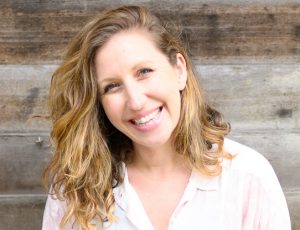 Amy B. Scher is an energy therapist, expert in mind-body healing, and the bestselling author of How to Heal Yourself When No One Else Can and How to Heal Yourself from Anxiety When No One Else Can. She has been featured in the Times of India, CNN, HuffPost, CBS, the Washington Post, Cosmopolitan, the Los Angeles Review of Books, Curve magazine, and San Francisco Book Review. Scher was also named one of the Advocate’s “40 Under 40.” She lives in New York City. For more, visit amybscher.com.
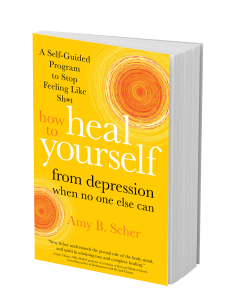
Learn More
Sounds True | Amazon | Barnes & Noble | Indiebound | Bookshop
Tools for Opening Ourselves to Our Deeper Nature
A few months ago, I found when getting up from the table that I could no longer walk. A meniscus had ruptured and wedged itself against my knee joint. It was very painful, but luckily, thanks to my friends, I was able to get an MRI that same day and be operated on the following day. For the operation, whether I liked it or not, I had to submit to a general anesthesia, and I remained unconscious a little less than two hours.
Unexpectedly, when I woke up, I had a very enriching experience. I had the impression of not being completely there. I was in a light and luminous state of mind. My first thoughts went toward my spiri- tual teachers. For a good hour, their presence illuminated my mental landscape. I experienced a state of bliss, of devotion, and unalloyed trust. I was alone in my room, and I began softly to chant verses that reminded me of my teacher. My thoughts also went to other people who are dear to me.
I said to myself that if things go this well at the time of death, it won’t be too bad! Could anesthesia be a kind of dress rehearsal for dying? Could such a moment show us what is present in the profoundest depths of our mind when the thought processes that clutter the field of consciousness have been silenced? All in all, I was very glad to have gone through this anesthesia experience.
Later, I wondered if such experiences could be revealing about our basic nature. This feeling of lightness and bliss could perhaps result from not immediately reifying the world around us when waking up from the anesthesia. At that moment the mind is not yet distorted by myriad conceptual constructs. This is the antithesis of dwelling on thoughts; it is perfect simplicity. I felt like a young child discovering the beauty of life with a fresh and transparent mind.
— Matthieu Ricard
Toolbox for Opening Ourselves to Our Deeper Nature
MATTHIEU RICARD:
Keep your mind open. Experience the key moments in life with an open mind, welcoming the range of constructive possibilities for oneself and others.
Discriminate. Let what really counts come to the surface from the profoundest depths of consciousness.
Be confident. No matter what happens, you will find a way to utilize adverse circumstances as catalysts for making progress on the spiritual path and for manifesting greater compassion toward those around you.
Inhabit the space of interdependence. Resituate the events that affect you in the much larger context of the interdependence of all beings and all things, who like you, experience countless joys and sorrows.
ALEXANDRE JOLLIEN:
Contemplate the little persona that you play all day long. Look at the labels, the functions you use to define yourself. Examine the outfit that you dress up in from morning till night so that you can go naked to meet your deeper nature.
Be aware of the heavy weight of education, of the mass of prejudices, of the heap of illusions that have ended up as an overlay on reality. Just identify this factitious layer so that you can take in daily life as it is without the intervention of ego, of concepts, and of the thousand expectations that shape your world.
Discover the deep personal aspirations that inhabit you. What do you expect out of life? What is it that you are running after so avidly?
Accept losing your grip. Ego defends its territory tooth and nail. It sets up boundaries, busies itself delimiting its world. In its folly, it isolates us, confines us to solitude, to distance. Opening your heart, going beyond the bounds of narrow individuality, means facing the experience of leaping into the void, of swimming in the open sea of freedom.
CHRISTOPHE ANDRÉ:
Discover your inner resources. The deeper nature we have been talking about is not just a theoretical matter, but a very practical one. We should do our best never to forget all the strengths and resources we have within us. They are not an illusion. Our mindset is such that we quite often underestimate our personal capacity to deal with adversity. And then there are the strengths and resources all around us, the help and inspiration that others can supply us. We are better equipped than we think. To access these resources within us and outside us, the best thing is not to shrink back into ourselves and dwell on our fears and bitterness or on our certainties, positive or negative.
What if nothing happens? What if no tangible sign of the existence or emergence of our deeper nature comes along? Well, it’s not that serious! In any case, it’s there. Let’s just not forget to live, act, love, work, and enjoy ourselves; to help others the best we can; and to continue to be open to this profound and universal aspect of ourselves that we all have within us.
This is excerpted from the newest book from Matthieu Ricard, Christophe André, and Alexandre Jollien, Freedom For All Of Us: A Monk, A Philosopher, and a Psychiatrist on Finding Inner Freedom.

Matthieu Ricard is a Buddhist monk, a photographer, and a molecular geneticist who has served as an interpreter for the Dalai Lama.
Christophe André is a psychiatrist and one of the primary French specialists in the psychology of emotions and feelings.
Alexandre Jollien is a philosopher and a writer whose work has been attracting an ever-growing readership. Together, they are the authors of In Search of Wisdom and Freedom For All of Us.
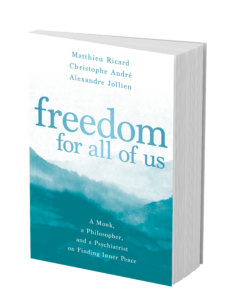
Learn More
Sounds True | Amazon | Barnes & Noble | Bookshop | IndieBound
The Simple Magic of a Book
One of the gifts of isolation, solitude, and social distancing is the opportunity to reconnect with pieces of soul and strands of vision that have become lost in the busyness of our ordinary lives.
Reading for many has become a lost art. We can become so used to turning on the news, scrolling through Facebook, becoming lost in hours of YouTube or Netflix, or fused with one electronic device or another. Nothing wrong with any of these, but at times an alternative portal will open.
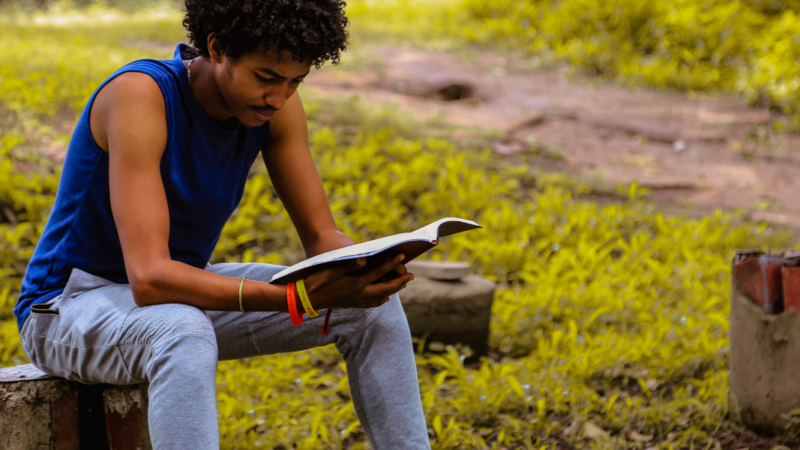
To take a book and find a place within your home or under a tree or out in the park and go on a pilgrimage with it. Ask the stars to help you to find a place to just be for a while and open to revelation.
It need not be a “spiritual” book, though of course those are fine, too. A book of poetry, a novel, a book of art history, or of mythology.
Allow its images to come alive, its metaphors, its characters… step into the poetic landscape with the figures and enter a state of receptivity and play. Sense what they are sensing, feel what they are feeling as these correspond with the internal others dancing within you.
Not necessarily reading for “information,” but for communion. Allow the language to open you, to uncover a feeling you haven’t felt for a long time, an ache in the heart that longs for tending, a dream you had forgotten, a vision that you sense circling around you.
Read a paragraph or two and close the book. Enter the interactional field – with the natural world, with the visions, figures, moods, feelings, and images that seek your attention, your curiosity, your care, and just a moment of your being-ness.
We can so easily forget the magic of this place, of the imaginal realms, of those liminal places in between the physical world of matter and the transcendental realm of pure spirit. In the liminal we can dance and play and see and perceive and sense and intuit something holy.
A good book can help us do this, can serve as a companion as we step into uncharted territory.
Reading has been such an important part of my life. My books are my friends, lovers, allies, guides, and they also challenge me, break me open, tenderize and marinate me in the Unknown. They reveal how little I know about this world, this soul, this heart, this place, and the unique opportunity to be here. I find this so lifegiving.
I fantasize that perhaps in other worlds there are no books. That is sad to think about. For me, at least.
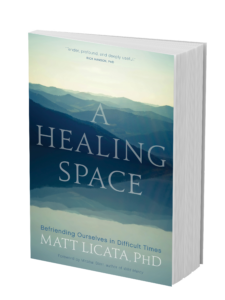
This blog post originally appeared on Matt Licata’s blog, A Healing Space. Redistributed with permission.
 Matt Licata, PhD, is a practicing psychotherapist and hosts in-person retreats. His work incorporates developmental, psychoanalytic, and depth psychologies, as well as contemplative, meditative, and mindfulness-based approaches for transformation and healing. He co-facilitates a monthly online membership community called Befriending Yourself, is author of The Path Is Everywhere, and is the creator of the blog A Healing Space. He lives in Boulder, Colorado. For more, visit mattlicataphd.com.
Learn More
Sounds True | Amazon | Barnes & Noble | Bookshop | Indiebound
Plants, People, and Cosmic Balance: A Healing Justice Invitation
Plant medicine has always been the people’s medicine, and flower essences create unique opportunities for issues surrounding accessibility, as essences are extremely safe and can be made rather inexpensively. The shift toward holism—complementary and alternative medicine (CAM) and integrative medicine—and the proliferation of herbal interventions within our health-care system are proof that we are making progress. In light of this, there are a number of dynamic ways we can promote flower essences to be even more accessible and inclusive for people. Even flower essence therapy itself is a modality historically dominated by white men, but increasingly it is being pushed forward by women-identified, LGBTQIA+, and BIPOC healers.
Currently, the alternative healing community is processing its own biases. Much of alternative medicine was developed in the service of the dominant culture, or the patriarchy. Therefore, it hasn’t been a healing space for many groups, including but not limited to women, people of color (BIPOC), LGBTQIA+, people with disabilities, economically oppressed people, neurodiverse people, and (in the United States) non-native English speakers. In the words of Cara Page, a founding member of Kindred Southern Healing Justice Collective, healing justice “identifies how we can holistically respond to and intervene on generational trauma and violence, and to bring collective practices that can impact and transform the consequences of oppression on our bodies, hearts, and minds.”
One of the main themes of The Bloom Book involves balancing duality, which means challenging the perpetuation of oppressive systems. Unless we are actively engaged in dismantling racism, sexism, homophobia, transphobia, xenophobia, and ableism, we are merely reinforcing the power structures we are claiming to challenge. As models of healing justice are emerging, many organizations and community collectives are generating their own missions and value statements from which to work. Meanwhile, practitioners—especially white practitioners like me—have to ask ourselves:
How is my work a function of my privilege?
Where can I be doing better?
Does my practice truly support inclusivity, diversity, and accessibility?
The working definitions of healing and trauma are also evolving. Within a healing justice framework, one can see how, by understanding trauma merely as “an emotional response to a terrible event,” we are ignoring a more inclusive interpretation that includes the cumulative and historical trauma of colonization. In the last decade, science has validated that trauma is intergenerational and historical. Likewise, many traditions include community in what constitutes emotional and spiritual healing, whereas Western models of mental health are focused exclusively on the individual self.
When you open yourself up to the plant kingdom, new awareness can develop. You can become more empathic, which sounds pleasant in theory, but can be overwhelming because now you’re not just experiencing more of your own feelings, but the feelings of others as well. If you’re committed to applying a healing justice framework in your work, you will likely expose new trauma and have to reckon with your own privilege, which can be painful. You could develop more attunement with nature, which also can feel wonderful and, because of the tragic state of our Earth, completely disorienting. At this time, we are experiencing a heightened polarity between the light and the dark. We are being asked to hold a neutral space for all this duality and to have more compassion for all life. Flower essences enhance the energetic interconnection between all living things and so are especially well suited to support an expansion of consciousness.
Understanding how we function within—and our responsibility to—the collective is important because none of us operates alone. If you forget what you derive from the collective, you assume you don’t owe it anything and exist separately from everyone. Much of the privileged world enjoys the benefits of being part of the collective, whether we are conscious of it or not: rights, amenities, protection, accessible health care, clean drinking water, electricity, and so on. So, those with the material upper hand at this time have a special responsibility to the rest of those sharing the Earth.
Within a healing justice framework, we must not only question our privilege as white people, we must elevate BIPOC leadership within all the transformative justice movements. We are all dependent on one another to collectively wake up and heal.
In this way, it is an exciting time for the community of herbalists and flower essence practitioners. Modalities that are so helpful in bringing people into balance are themselves coming into greater balance. A sign of hope within an era of great hope. The ancient wisdom explored in The Bloom Book supports that the power of the plants is coming through in dynamic new ways. This text exists, in part, to provide more context around the validity and potency of the flowers. The spectrum of human emotional experience is here for our development and delight.
The Absence of Women-Identified, WOC, and QTBIPOC Healers Throughout History
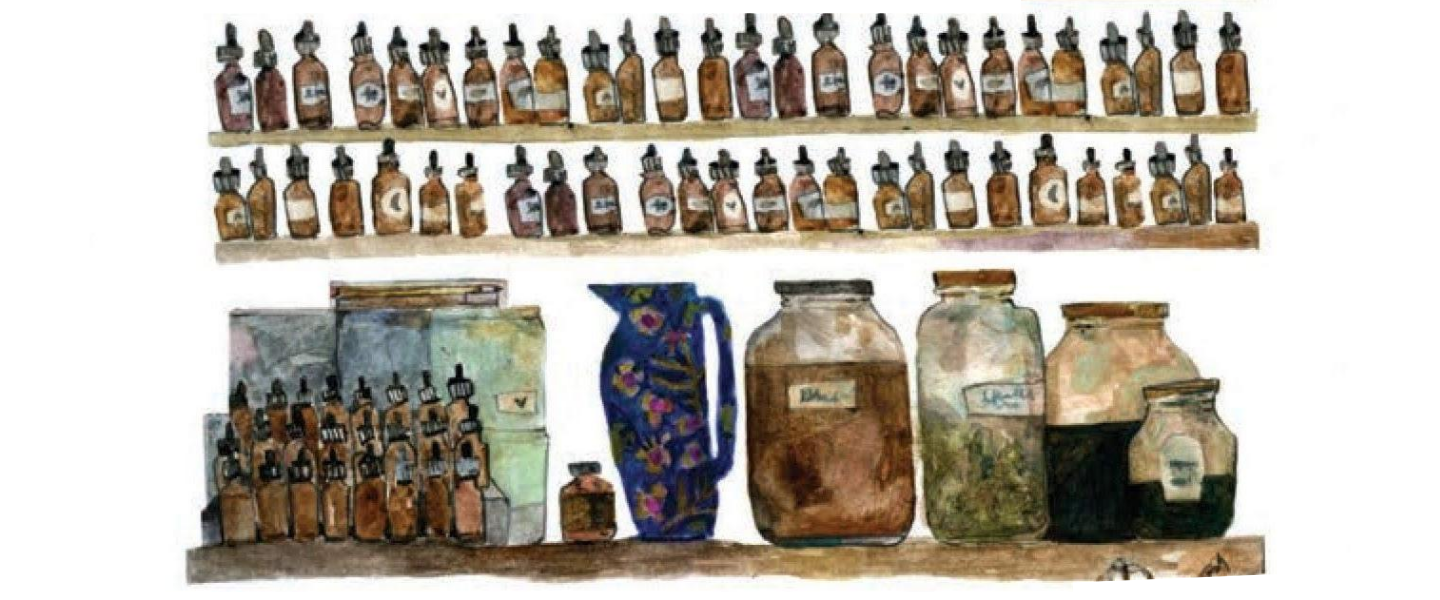
Missing from our Western history books are most of the contributions by women-identified healers through the ages. Even more scarce are WOC, and most scarce are queer and trans people of color (QTBIPOC) within the codex of Western medical history. The misogyny of the burgeoning patriarchy from ancient Greece spread throughout Europe, Africa, the Americas, and the rest of the world through colonization by white settlers. The suppression of women healers in Europe and the Americas coincided with the rise of the ruling class, capitalism, and the privatization of medical care, away from folk-healing traditions—traditions that women played a huge role in preserving and advancing. Gender seemed to be less of a construct throughout many parts of the ancient world, as there are significant written reports of intersex and gender-fluid healers. In many cases, those who exhibited androgyny were known as having special healing powers because of their ability to connect with both masculine and feminine energy.
As historical contexts are becoming more inclusive and less Eurocentric, there is more room for the theory around matriarchal-centered civilizations being much more prominent than previously thought. Senegalese anthropologist and historian Cheikh Anta Diop felt that, historically, most of Africa was matriarchal in organization. Colonizers were tremendously misogynistic, which holds much information for us to ponder as we consider our connection to the feminine and the history of medicine.
The lack of representation of women and WOC healers in the historical literature of medicine is decidedly a Western trait. Not only is much history transmitted orally and through practices and traditions, but the written history is also a very biased account, formulated in large part by, and for, white men. While our participation in medicine and healing traditions has been historically restricted in the West, women have long been associated with healing, especially within the domains of life and death—as midwives and compassionate caregivers helping to bring new life and support the soul into the afterlife. Women healers have traditionally addressed the issues and needs of populations that our culture typically shames and would rather ignore. Written accounts are limited, but we do have a record of a talented few. We must honor the oral traditions that are not meant to be shared (by me anyway) with the mainstream. There is a protection in keeping knowledge hidden from the masses. This wisdom is secured within the light lineage of all healers.
Conclusion
The social and healing justice movements have affected me deeply, and it is my sincere hope that we can continue to decolonize and dismantle where dominant systems are limiting the positive proliferation of alternative healing and flower essence therapy to make them more accessible and inclusive. The more we come into balance in this way, the more transformation is available to us all, our communities, and our Earth—and the more we maintain plant medicine as medicine for all people.
Healing Justice Flower Essence Allies
There are a number of herbalists such as Karen Rose of Sacred Vibes Apothecary, Jennifer Patterson of Corpus Ritual (also a Bloom Book contributor), Lauren Giambrone of Goodfight Herb Co., and Amanda David of Rootwork Herbals, (to name a few), who have been speaking on the subject of healing justice for quite some time, and I am grateful for their leadership and inspiration. Healing justice business models such as that of Third Root, a worker-owned community center that provides collaborative, holistic health care in Brooklyn, offers a standard that everyone in the healing arts should aspire to.
I offer some essences below that are wonderful to use in process groups or healing circles that center on antiracism and anti-oppression work. Some flower allies to assist you as you dig deeper into this rich and rewarding terrain are:
Delta Gardens lemon balm—a wonderful essence for when you are immersed in deep work, to keep calm and carry on
Delta Gardens valerian—for any resistance to change, to be able to take in and assimilate new information
Flower Essence Society quaking grass—“harmonious community consciousness,” letting go of personal attachments in social groups
Flower Essence Society lupine—seeing beyond the level of self, seeing self as part of the whole
Flower Essence Society or Delta Gardens echinacea—integration of those parts of the self that may have been repressed
Flower Essence Society or Delta Gardens borage—to support the heart and offer courage
Bach Original Flower Remedies water lily—for humility and wisdom in communication, to heal the perceived separation we feel from others based on race, class, or gender
Flower Essence Society pink yarrow—for emotional vulnerability, assists in discerning what is your responsibility to emotionally process
Additional Information on Healing Justice
A Not-So-Brief History of the Healing Justice Movement, 2010-2016
What Is Healing Justice?—Healing by Choice Detroit
Healing Justice: Holistic Self-Care for Change Makers—Transform Network
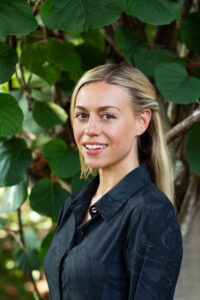
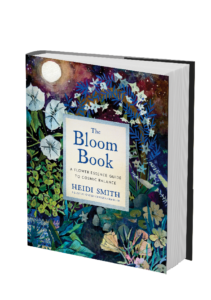
Heidi Smith, MA, RH (AHG), is a psychosomatic therapist, registered herbalist, and flower essence practitioner. Within her private practice, Moon & Bloom, Heidi works collaboratively with her clients to empower greater balance, actualization, and soul-level healing within themselves. She is passionate about engaging both the spiritual and scientific dimensions of the plant kingdom, and sees plant medicine and ritual as radical ways to promote individual, collective, and planetary healing. She lives in Brooklyn, New York, with her partner and two cats. For more, visit moonandbloom.com.
Learn More
Sounds True | Amazon | Barnes & Noble | Bookshop
On The Mindfulness Revolution and Our Fear of Authenticity (with Jon Kabat-Zinn)

Deepen your personal healing practice with guided meditations, audio presentations, and learning intensives by Jon Kabat-Zinn on Sounds True »
Have you ever wondered who coined the term ‘mindfulness’? That was Dr. Jon Kabat-Zinn. He describes it as “paying attention on purpose with a non-judgmental attitude.”
“I take an enormous amount of pleasure in actually not trying to get anywhere” —Jon Kabat-Zinn
Partly because of his work and research, this concept of ‘mindfulness’ has become mainstream. We see it at colleges, small businesses and large corporations, and—perhaps most notably—in medicine (Kabat-Zinn also founded the Stress Reduction Clinic at the University of Massachusetts Medical School).
In Tami’s interview with Kabat-Zinn on Insights at the Edge, the two begin asking: Why is mindfulness gaining popularity in the first place? In the process, they explore what’s simple, profound, and relatable about it.
AGE OF MINDFULNESS

“Once you realize that we are completely embedded in an interconnected world … the only real response is a sense of profound appreciation or affection for the fact that we are not separate”
Mindfulness has always been a part of humanity. It has been called different names and interpreted by different lenses, but the concept of some greater unity of which we are all a part—that doesn’t seem to be going anywhere.
So, even if it’s a trend, couldn’t there be more to it? In a way, mindfulness seems to take on the breath of intuition, not necessarily logic or reason. It is truly the air of possibility.
YOU ARE NOT YOUR THOUGHTS

You cannot get rid of your thoughts. But when you create distance between yourself and your thoughts, you can let them wash through you. You do not have to fight to maintain them or believe them. And, you do not have to fight to let them go.
“Suppose the sky is awareness. If a bird flew through, then the sky would know it. … [The sky] has its own sort of ground condition of just being the sky, just being awareness”
He describes this awareness not as a state of being, but as a shift in seeing. There was always space there. We just needed to rotate a lens.
Have you ever retreated your vision while meditating, so that you were gazing out from between your two closed eyes? Like that. That field of awareness stretches infinitely—as conscious beings, it weaves us together.
This feeling is both humbling and terrifying in its awesomeness. When the sky is so big, we don’t know what we are. But we can accept this uncertainty. Our minds, our egos, our bodies—can expand with it.
WE ARE ALL GENIUSES

Homo sapien sapien literally translates from Latin to “the species that knows and knows that it knows.”
In the episode, Jon and Tami talk beautifully about mindfulness’s fundamental humanness. There is an utter connection between our feet grounded on this Earth, and the spaces we don’t understand.
“There is something about mindfulness that is absolutely core to our humanity … the final common pathway of what makes us human”
Sometimes, meditation helps us feel the truth of this. Once we know this awareness is there, we can integrate it into the ways we think and make decisions.
FEAR OF AUTHENTICITY
 We reach for purpose; we wish to understand our place in the universe. (It isn’t weird for us to do this. If I were an alien, and I heard humans were doing this, I would be like, well, yeah.)
Yet, we are afraid to be ourselves. We don’t want ourselves to disappear. So we keep inside our deepest sorrows, anxieties, and emotions.
The parts of us we try and protect so carefully end up banging on the walls inside of us, stuck.
“It’s not like we can never suppress that shadow side … but if we can come to understand it in a deeper way, then I think there is a potential … [to] elevate what is most beautiful and good about all human beings”
What if we gave all of it—ourselves, and our connection to the world—the space to breathe?
(And the possibilities begin to shimmer.)
ABOUT JON KABAT-ZINN

Jon Kabat-Zinn, PhD, is professor of medicine emeritus at the University of Massachusetts Medical School, where he founded the Center for Mindfulness in Medicine, Health Care, and Society in 1995, and its world-renowned Mindfulness-Based Stress Reduction (MBSR) Clinic in 1979. His trailblazing research has helped bring mindfulness meditation into mainstream medicine. He is the author of 10 books, including the bestsellers Full Catastrophe Living; Wherever You Go, There You Are; and Mindfulness for Beginners.
Take a look at Jon Kabat-Zinn’s book and accompanying CD of guided practices, Mindfulness for Beginners, published by Sounds True!
★★★★★ Easy to read and informative as well as inspiring. —gus c
★★★★★ In my opinion, a must-read for all humans. —Yves N
ABOUT THE AUTHOR
When she isn’t writing, playing music or teaching, Dani Ferrara blogs at Sounds True and researches the alchemy of healing. Explore her art at daniferrarapoet.com.