

What is Somatic Abolitionism?
Somatic Abolitionism is a living, embodied anti-racist practice, a form of culture building, and a way of being in the world. In this immersive audio workshop, Resmaa Menakem presents ten sessions of insights and body-based practices to help listeners liberate themselves—and all of us—from racialized trauma and the strictures of white-body supremacy.
Listen to the first 15 minutes of this audio program:
https://soundstrue-ha.s3.amazonaws.com/video/You-Me-Us-Racialized-Trauma-Excerpt.mp4#t=,15
This is an adapted excerpt from You, Me, Us and Racialized Trauma by Resmaa Menakem.
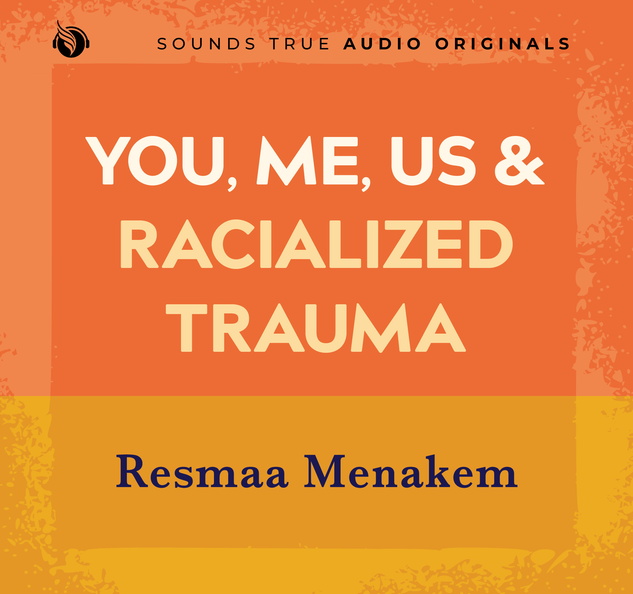
You, Me, Us, and Racialized Trauma
Somatic Abolitionism is a living, embodied anti-racist practice, a form of culture building, and a way of being in the world. In an immersive audio workshop, Resmaa Menakem presents ten sessions of insights and body-based practices to help listeners liberate themselves—and all of us—from racialized trauma and the strictures of white-body supremacy.

Authenticity is a Unique Superpower That We All Have
People often think that “personal branding” is a dirty word. That it revolves around ego and vanity and self-promotion. After building and running my personal branding agency, SimplyBe. and reflecting on our unique approach to this space, I realized that there was something much deeper to this work.
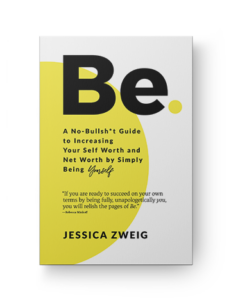
Each of us is here for a specific reason. Each of us has a light that we need to shine. And most people don’t know how to technically, practically tell their own story. Most of all, they don’t feel they have the permission, the confidence, the support, to take the leap. My book, Be: A No-Bullsh*t Guide to Increasing Your Self Worth and Net Worth by Simply Being Yourself, is that permission slip—for you to get out of your own way, to dive deep and take the journey within. Although often perceived as a practice in exterior image, personal brand is really about how you see yourself, how you know yourself, how you come to cherish yourself. That is the journey that awaits you in Be.
There are a lot of people who don’t want to be on social media or don’t want to be “famous” and therefore feel like the work of personal branding isn’t for them. But frankly, it doesn’t matter if you use social media every day or if you never touch it for the rest of your life—you have a personal brand.
Your personal brand is your value. It’s your worth. It’s the impression you leave behind in any room or crowd. It’s how you make people feel. It’s how you interface with people wherever you go—the way you treat your barista, the way you talk to your children’s teachers, the way you communicate with your team at work, how you create relationships in our community. It’s your legacy. All of these daily interactions are opportunities to hone and master your brand on your terms. That is personal branding.
My background is in marketing and branding. I’ve cut my teeth in the world of social media working with Fortune 500 brands over the last 15+ years. That said, in this book you will find frameworks and easy DIY tools to build your brand from the ground up and to take it online and leverage it to build your business, your career, your reputation, your followership. You’ll learn how to craft a message and a strategy, build PR awareness, create original content, identify your competitive landscape, and much more. It is a very tactical book in that sense. But my biggest inspiration and passion is bringing more humanity to business. Be. is a personal empowerment book at its core. Simply put, Be. is a study in the power of authenticity.
Authenticity is a unique superpower that we all have. It’s a practice in you simply being you, inclusive of all of your shadows, sh*t, failures, weaknesses, AND all of your successes, triumphs, talents, and unique gifts. That’s what Be. will really challenge you to own—your fully unapologetic YOU.
My book is far more than what meets the eye. I hope you pick it up and learn that you, indeed, have a brand and that this simply means that you have something worthy and meaningful to share with the world. Personal branding, at its core, is an act of service. It is about what we are here to give versus what we are here to get. And when we architect a personal brand from that place, we come alive.
The world needs your light.
The world needs you to shine.
Every one of us has not just the privilege but the responsibility to step forward and simply be.
Don’t let us down.
With love and light,
Jessica Zweig
Bestselling author of Be.
Founder & CEO, SimplyBe.

Jessica Zweig is the CEO and founder of the SimplyBe. agency, a personal branding company that helps millions of people worldwide. She’s been named a “personal branding expert” by Forbes, a Top Digital Marketer to Watch by Inc., one of 2020’s Most Notable Entrepreneurs by Crain’s Chicago Business, and the 2018 and 2019 recipient of the international Stevie® Award for Female Entrepreneur of the Year. She’s been featured on FOX, ABC, NBC, Thrive Global, Business Insider, and more as an expert on how an authentic personal brand is the key to a more successful career. For more, visit jessicazweig.com.
Author photo © Lindsey Smith
Learn More
Amazon | Barnes & Noble | IndieBound | Bookshop | Sounds True
Tools for Opening Ourselves to Our Deeper Nature
A few months ago, I found when getting up from the table that I could no longer walk. A meniscus had ruptured and wedged itself against my knee joint. It was very painful, but luckily, thanks to my friends, I was able to get an MRI that same day and be operated on the following day. For the operation, whether I liked it or not, I had to submit to a general anesthesia, and I remained unconscious a little less than two hours.
Unexpectedly, when I woke up, I had a very enriching experience. I had the impression of not being completely there. I was in a light and luminous state of mind. My first thoughts went toward my spiri- tual teachers. For a good hour, their presence illuminated my mental landscape. I experienced a state of bliss, of devotion, and unalloyed trust. I was alone in my room, and I began softly to chant verses that reminded me of my teacher. My thoughts also went to other people who are dear to me.
I said to myself that if things go this well at the time of death, it won’t be too bad! Could anesthesia be a kind of dress rehearsal for dying? Could such a moment show us what is present in the profoundest depths of our mind when the thought processes that clutter the field of consciousness have been silenced? All in all, I was very glad to have gone through this anesthesia experience.
Later, I wondered if such experiences could be revealing about our basic nature. This feeling of lightness and bliss could perhaps result from not immediately reifying the world around us when waking up from the anesthesia. At that moment the mind is not yet distorted by myriad conceptual constructs. This is the antithesis of dwelling on thoughts; it is perfect simplicity. I felt like a young child discovering the beauty of life with a fresh and transparent mind.
— Matthieu Ricard
Toolbox for Opening Ourselves to Our Deeper Nature
MATTHIEU RICARD:
Keep your mind open. Experience the key moments in life with an open mind, welcoming the range of constructive possibilities for oneself and others.
Discriminate. Let what really counts come to the surface from the profoundest depths of consciousness.
Be confident. No matter what happens, you will find a way to utilize adverse circumstances as catalysts for making progress on the spiritual path and for manifesting greater compassion toward those around you.
Inhabit the space of interdependence. Resituate the events that affect you in the much larger context of the interdependence of all beings and all things, who like you, experience countless joys and sorrows.
ALEXANDRE JOLLIEN:
Contemplate the little persona that you play all day long. Look at the labels, the functions you use to define yourself. Examine the outfit that you dress up in from morning till night so that you can go naked to meet your deeper nature.
Be aware of the heavy weight of education, of the mass of prejudices, of the heap of illusions that have ended up as an overlay on reality. Just identify this factitious layer so that you can take in daily life as it is without the intervention of ego, of concepts, and of the thousand expectations that shape your world.
Discover the deep personal aspirations that inhabit you. What do you expect out of life? What is it that you are running after so avidly?
Accept losing your grip. Ego defends its territory tooth and nail. It sets up boundaries, busies itself delimiting its world. In its folly, it isolates us, confines us to solitude, to distance. Opening your heart, going beyond the bounds of narrow individuality, means facing the experience of leaping into the void, of swimming in the open sea of freedom.
CHRISTOPHE ANDRÉ:
Discover your inner resources. The deeper nature we have been talking about is not just a theoretical matter, but a very practical one. We should do our best never to forget all the strengths and resources we have within us. They are not an illusion. Our mindset is such that we quite often underestimate our personal capacity to deal with adversity. And then there are the strengths and resources all around us, the help and inspiration that others can supply us. We are better equipped than we think. To access these resources within us and outside us, the best thing is not to shrink back into ourselves and dwell on our fears and bitterness or on our certainties, positive or negative.
What if nothing happens? What if no tangible sign of the existence or emergence of our deeper nature comes along? Well, it’s not that serious! In any case, it’s there. Let’s just not forget to live, act, love, work, and enjoy ourselves; to help others the best we can; and to continue to be open to this profound and universal aspect of ourselves that we all have within us.
This is excerpted from the newest book from Matthieu Ricard, Christophe André, and Alexandre Jollien, Freedom For All Of Us: A Monk, A Philosopher, and a Psychiatrist on Finding Inner Freedom.

Matthieu Ricard is a Buddhist monk, a photographer, and a molecular geneticist who has served as an interpreter for the Dalai Lama.
Christophe André is a psychiatrist and one of the primary French specialists in the psychology of emotions and feelings.
Alexandre Jollien is a philosopher and a writer whose work has been attracting an ever-growing readership. Together, they are the authors of In Search of Wisdom and Freedom For All of Us.

Learn More
Sounds True | Amazon | Barnes & Noble | Bookshop | IndieBound

Breaking away from the idea that there is one “right” way to mother
We live in a wild world with a wealth of information at our fingertips. This means we can read reviews, check forums, and see what other parents are saying about everything we purchase or do for our children.
But that is not always a good thing. There is such a thing as too much research.
I distinctly remember working with a client who had very high expectations around her child’s food. She was concerned with what ingredients were in the food, how it was prepared, how it was served—and anything less than “healthy” felt wrong to her. She was a self-proclaimed perfectionist who wanted the best for her child—she wasn’t going to “lower her standards” at the request of her partner or anyone else.
As a result of her food concerns, she spent hours upon hours extensively researching topics related to food such as GMOs, toxins, ingredients, and safety. Through her research, she also read that stress could decrease her milk supply—so she shut down any conversations when her family tried to approach her about this or how it had taken over her life.
This level of research was no longer about the food—postpartum anxiety was in the driver’s seat, pushing her to search for control.
It’s also important to break away from the idea that there is one “right” way to mother. Just because we have access to information doesn’t mean there isn’t room for nuance. Take “healthy food” as an example. What constitutes a “healthy” diet has been a debated topic for decades and is often a wellness space filled with fads and extremes with each approach contradicting the next. There have been more rules prescribed to our food then I can count that cause people not to trust themselves and leave them seeing food as being good or bad. Food is not black or white. Our approach doesn’t have to be all or nothing.
In my client’s case, research had gone beyond just information-seeking. Sometimes, research is just research. But other times, research is:
- Trying to find the “right” or “best” way to do something
- Seeking reassurance
- Grasping for certainty
- Feeding your anxiety
- An attempt to soothe your anxiety
I have seen this pattern play out many times with many of my clients. I believe that in many ways intensive mothering prevents us from seeing signs of anxiety. When we interpret perfectionism and the need to avoid mistakes at all costs as being a good mother, we have a lot of pressure to carry. It’s no wonder that so many of us find ourselves in the research rabbit hole.
Does that mean all research is bad? Of course not. But we need to learn the difference between when it’s helping and when it’s not. Researching should be used to provide you with enough information to make an informed decision. It should have boundaries—not be all-consuming.
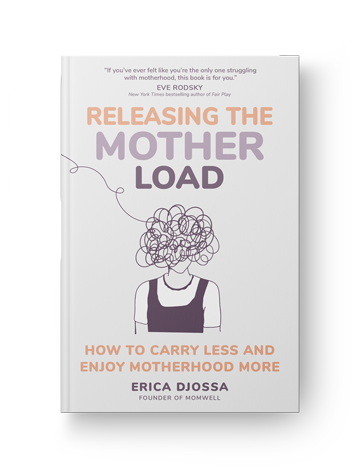
Excerpt from Releasing the Mother Load: How to Carry Less and Enjoy Motherhood More by Erica Djossa.

Erica Djossa
Erica Djossa is a registered psychotherapist, sought-after maternal mental health specialist, and the founder of wellness company Momwell. Her popular Momwell podcast has over a million downloads. Erica’s a regular contributor to publications like the Toronto Star, Scary Mommy, and Medium, and her insights have been shared by celebrities like Ashley Graham, Nia Long, Christy Turlington, and Adrienne Bosh. She lives in Toronto. For more, visit momwell.com
Learn More
Amazon | Barnes & Noble | Bookshop | Sounds True

Memories of Cats I Loved: Brother David Steindl-Rast

Mietzi, 1980s, New York City
For millennia, humans have speculated why some of us are born into riches, others into rags. If
we can’t answer this question for humans, how shall we answer it for cats? Bad karma, you
say? If so, Mietzi must have misbehaved quite badly in a previous incarnation to be born in a
flooded basement this time around. No one knows. What we do know, however, is that the most
disadvantaged pull most strongly on our heartstrings, and so someone rescued Mietzi and her
siblings from their sunless island of soggy rags. No one ever mentioned the mother cat, and I
don’t know what happened to the other kittens of that litter. All I know is that little Lisa
persuaded her reluctant grandmother, and so Mietzi became my mother’s cat.
After that deluged basement, even a tenth-floor New York apartment that was never designed
for pets must have appeared like paradise to the poor kitten. Or so we were hoping. Lisa
delivered Mietzi in a soft-cushioned basket, and the cat was still sitting in that basket when, after
an elaborate farewell from the cat, Lisa kissed her grandmother goodbye at the door. The door
closed, Mother turned around, and the basket was empty.
That the cat was gone was bad enough, but her pitiful meow was not gone. It kept haunting the
apartment for the next hour, while Mother, eventually with the help of her neighbors on both
sides, searched every corner so methodically that Scotland Yard would have been proud of that
job. The voice, unaccountably, always seemed to come from nowhere; yet it persisted.
When the ladies finally dismantled the Sony radio and hi-fi record player my mother won at a
raffle, Mietzi emerged from the only place where she could have gotten as covered with dust as
she did: one of the loudspeaker boxes. A bad start, especially since Mother felt that the kitten
needed a bath. (There must have been lots of water signs in Mietzi’s natal chart.)
No cat could have been more loved, more talked about in telephone conversations with children
and grandchildren, more lovingly reported on at length in every letter.
Mietzi wasn’t young anymore when Mother was diagnosed with leukemia. Mother was still at
home, and I was with her during the decisive days when the doctor was testing whether or not
medication could help her. I was sitting by Mother’s bed then, when Mietzi seemed to get ready
for an acrobatic stunt. Balancing on the back of the rocking chair, she was clearly considering
jumping from there onto a high chest of drawers.
Never before had she tried this. Ears laid back, Mietzi was measuring the distance. “Is she
going to make it?” I asked—and the moment the words were out, I realized that this was the
question my brothers and I were anxiously asking about Mother at that time. “Let’s see,” Mother
replied. Nothing else was said—neither then nor later—but both of us knew what was at stake.
There was no tinge of superstition about this. Everything hangs together with everything; we
know that. In principle then, we may look at one event and find in it a clue for quite a different
one, unconnected though they may appear to be. Some try this with tea leaves or planets;
others think that, in practice, this is too complex an art. There are moments, however, when an
omen lights up with such clarity that it would be difficult to deny its foreboding. Not wanting this
to be true, Mother and I knew, nevertheless, what was going on here.
Mietzi steadied herself on the back of the rocking chair, crouched, jumped, and missed. Have
you ever noticed the embarrassment of a cat when something like this happens? We tried to
console Mietzi, Mother and I, but we couldn’t quite console ourselves that evening.
The verdict was in. What was not decided was how we would handle it, and that is what really
matters.
Mother handled it with grace. Two days later, she was in the hospital again, never to return
home to Mietzi. Her mind was clear to the last, as she took care of unfinished business calmly
and efficiently. She knew in which folder important papers were kept, in which dresser; she
handed my brother the keys with a smile. Only once did she break down and cry: when Mietzi’s
future was to be decided. But a solution was found: since Mother’s apartment was at the same
time the office for her charitable work, which my brother would continue, Mietzi could stay where
she was. The “super” of the building, who was fond of Mietzi anyway, would look after her when
my brother wasn’t there.
Mother was at peace.
I sat next to her bed holding her hand, and she said, “This is how I’d like to die. You ought to sit
there holding my hand and I’d just fall asleep.”
“Well,” I said, “I’d like that, too, but we can’t plan it with such precision.” Not many hours later, I
was sitting in that very spot holding Mother’s hand when she went to sleep for good. So
peacefully did she breathe her last that there was no telling exactly when she passed from time
into the great Now.
Mietzi outlived her by a year or two, mercifully among her accustomed surroundings: the potted
plants on which she nibbled once in a while, the old rugs of which she knew every square inch
by their smell, and my mother’s empty armchair on which she curled up when she got lonely.
This is an excerpt from a story written by Brother David Steindl-Rast and featured in The Karma
of Cats: Spiritual Wisdom from Our Feline Friends, a compilation of original stories by Kelly
McGonigal, Alice Walker, Andrew Harvey, and many more!

Brother David Steindl-Rast was born in Vienna, Austria, and holds a PhD from the
Psychological Institute at the University of Vienna. After 12 years of training in the 1,500-year-
old Benedictine monastic tradition, Brother David received permission to practice Zen with
Buddhist masters. An international lecturer and author, Brother David is a leader in the monastic
renewal movement as well as the dialogue between Eastern and Western religions. His most
recent book is i am through you so i. He is the founder of A Network for Grateful Living. Learn
more at gratefulness.org.
Read The Karma of Cats today!
Sounds True | Amazon | Barnes&Noble | IndieBound


How to Cope with Shame, the Master Emotion
Shame has been called the master emotion because it takes over our bodies and our minds. It can freeze our nervous system. It can place us in a fog, unable to seek help, reassess a situation or reassess what is really going on. Shame defeats our ability to reflect on ourselves, get some support, and move on. Shame can be overwhelming, but if we can look at it clearly and catch it before it takes over, we can cope with it and create conditions that can transform it from an enemy into a friend.
This is not academic to us. We are both well-acquainted with the experience of shame. Co-author of Embracing Shame, Sheila Rubin has been researching shame since she was a shy five-year-old. “In my twenties, I remember having a new job and being so worried about being late for a first meeting that I showed up early and accidentally interrupted a lunch that was happening in the room,” notes Sheila. “I froze in embarrassment. I remember the shame voice saying to me: ‘What’s wrong with me? Maybe they shouldn’t hire me because something is wrong with me.’ Fortunately, while I was holding the door knob, frozen in shame, someone opened the door and invited me in with kindness.”
Embracing Shame co-author, Bret Lyon, remembers that, as a kid, when the gym teacher blew the whistle and said to pick teams. Everyone else was picked first. He still remembers trying to pretend it didn’t matter while he felt like dying inside.
One client accepted extra work even though he does not want to work weekends because he wants to be liked and couldn’t say “no” because it would be embarrassing.
Another client spoke of shame seeping into her mind about the changes in her body since giving birth. She is happy to be a mother, but the changes in her body and the inner dialogue in her mind keep her in shame circles. The differences between how she experienced her body and how she feels now is shame.
Our inner conversations may say a variety of unhelpful things. For many of us, it is the voice of not being good enough. Or we might feel like an imposter. If our partner or boss says that we made a mistake, that may be a trigger for a shame attack.
Here are some clues to know when shame may be operating in your mind and body:
Thoughts: There’s something wrong with me and I don’t want anyone to know. Maybe I am an imposter and I need to hide.
Sensations: Feeling shy, face flushed, brain can freeze, difficulty having a conversation.
Reactions: Embarrassed, going blank, blaming others, using activity to numb, withdrawing. Not able to write or think clearly and not know why.
Coping with shame
If, instead of letting shame take over, we can be with and observe our shame, we can actually begin to learn something from it. We can begin to transform shame from a toxic disruptor to a useful informant, from a devastating foe to a useful ally.
Here are a few experiments to try when you notice shame coming up. Instead of putting yourself down, try one, then reflect on the results and write them down in a journal or in your notes app:
Be kind to yourself. Say something kind to yourself to ease the shame.
Pause and take a breath. Pausing for even a few seconds or one minute can offer a new perspective. How might this allow you to set a new boundary or reframe your story in a healthier way?
Set boundaries. Is there an extra shift you cannot take this week? Can you say stop or politely decline?
Name your feelings. Notice what didn’t feel good in your reaction. Can you talk about what you’re feeling in a different way?
Ground yourself. Tap your feet or feel the earth under your feet.
Get support. Talk to a friend who is kind and who can hear your feelings.
Spend time in nature. Take a few minutes to bathe in nature to refresh and replenish.
Understand that change happens slowly. Talk back to the shame inside yourself for a bit and find if the shame can be a little less toxic. Even a small shift or change can help you move forward rather than staying stuck.
Being friends with your shame can begin to change yourself and your life. When toxic shame lifts there can be access to creativity and new doors can open. The weight of heaviness can be put down and we can have new hope for the future. The reason we do this work is so others can find hope when there is shame and they can transform it and heal it.

Sheila Rubin, MA, LMFT, RDT/BCT, has been researching shame since she was five years old. Along with her husband and colleague, Bret Lyon, she is a founder and codirector of the Center for Healing Shame, and cocreator of the Healing Shame–Lyon/Rubin Method. Through their popular workshops, they have taught thousands of psychotherapists, coaches, and other helping professionals across the world to more effectively identify and work with shame. Sheila is a Licensed Marriage and Family Therapist, a Registered Drama Therapist, and has taught at JFK University and CIIS, as well as being the eating disorder specialist at a hospital and directing Embodied Life Stories performances. For more, visit healingshame.com.
Bret Lyon, PhD, SEP has devoted almost two decades of his life to healing shame. Along with his wife and colleague, Sheila Rubin, he is a founder and codirector of the Center for Healing Shame, and cocreator of the Healing Shame–Lyon/Rubin Method. Through their popular workshops, they have taught thousands of psychotherapists, coaches, and other helping professionals across the world how to more effectively identify and work with shame. Bret holds doctorates in both psychology and drama and has taught at Tufts University, Pomona College, and the American Academy of Dramatic Arts, as well as writing and directing plays in regional theater and off-off Broadway. For more, visit healingshame.com.
